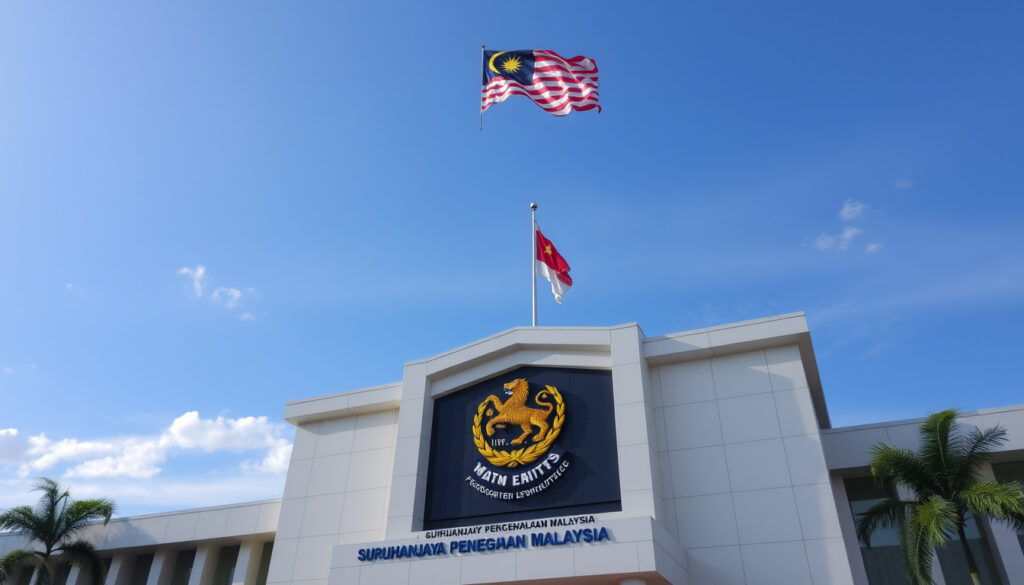
Suruhanjaya Pencegahan Rasuah Malaysia – Role, Functions and History
The Suruhanjaya Pencegahan Rasuah Malaysia (SPRM) stands as Malaysia’s principal body tasked with combating corruption, abuse of power, and related malpractice across the nation. Operating under the Malaysian Anti-Corruption Commission Act 2009, the agency investigates cases involving bribery and misuse of public office while also spearheading preventive initiatives aimed at strengthening ethical standards within both government and private sectors. Established in 2009 as an independent commission, SPRM replaced earlier anti-corruption bodies and now serves as the sole agency exclusively dedicated to eradicating corruption in Malaysia.
The commission operates from its headquarters in Putrajaya and maintains a workforce of approximately 3,000 personnel. Its mandate extends beyond reactive enforcement to include educational programs, research into the root causes of corruption, and collaborative efforts with international anti-corruption bodies. Understanding SPRM’s structure, functions, and historical development provides essential context for anyone seeking to comprehend Malaysia’s approach to maintaining public integrity and combating economic crime.
What is Suruhanjaya Pencegahan Rasuah Malaysia?
The Suruhanjaya Pencegahan Rasuah Malaysia, commonly abbreviated as SPRM and known internationally as the Malaysian Anti-Corruption Commission (MACC), functions as an independent body mandated to manage all matters relating to corruption throughout Malaysia. The commission was established on January 1, 2009, succeeding the Anti-Corruption Agency (ACA) following the enactment of the Malaysian Anti-Corruption Commission Act 2009.
English Name and Overview
The official English designation of SPRM is the Malaysian Anti-Corruption Commission, though the acronym MACC remains widely used in both local and international contexts. The commission serves as the nation’s sole dedicated anti-corruption agency, positioning itself at the forefront of Malaysia’s anti-corruption initiatives. Its operations are guided by principles of independence, transparency, and professionalism, values that underpin every aspect of its mandate and daily activities.
Mandate and Purpose
SPRM’s fundamental mandate encompasses three core objectives: eradicating corruption, preventing abuse of power, and addressing malpractice in both public and private sectors. The commission operates under a dual approach that combines rigorous enforcement against existing violations with proactive measures designed to prevent corruption from occurring in the first place. This balanced strategy reflects international best practices in anti-corruption governance.
The agency’s purpose extends beyond mere prosecution. SPRM actively engages in research to understand the underlying factors that contribute to corrupt behavior, particularly within the public service. Notably, research conducted by the commission has challenged common assumptions by revealing that low income levels are not the primary driver of corruption among government employees, suggesting that structural and cultural factors may play equally important roles.
- SPRM serves as Malaysia’s sole independent anti-corruption body established by federal law
- The commission operates under the Malaysian Anti-Corruption Commission Act 2009
- Its operations are guided by independence, transparency, and professionalism
- SPRM employs approximately 3,000 personnel across various divisions
- The agency investigates both active corruption and potential abuse of power cases
- Prevention initiatives include educational programs and systemic reforms
- Five independent oversight panels ensure accountability and proper governance
| Fact | Details |
|---|---|
| Legal Basis | Malaysian Anti-Corruption Commission Act 2009 |
| Establishment Date | 1 January 2009 |
| Predecessor | Anti-Corruption Agency (ACA) |
| Headquarters | Putrajaya, Malaysia |
| Personnel | Approximately 3,000 staff members |
| Oversight Mechanism | Five independent panels for check and balance |
What are the Functions and Powers of SPRM?
SPRM operates with comprehensive legal authority granted under the Malaysian Anti-Corruption Commission Act 2009. The commission’s jurisdictional scope encompasses investigating and preventing all forms of corruption and abuse of power, while also extending its reach to offenses defined under other legislative acts categorized as “Prescribed Offences.” This broad mandate enables the agency to address corruption in its many manifestations across both governmental and private sector contexts.
Investigation and Enforcement
The commission possesses extensive investigative powers that enable thorough examination of suspected corruption cases. These powers include the authority to summon witnesses, examine documents, freeze assets, and conduct raids when necessary. SPRM investigators can pursue cases involving bribery, where any person or agent solicits or receives gratification as an inducement for performing or abstaining from performing official duties. The agency also handles abuse of power cases, addressing situations where public officials use their positions for personal benefit or for the advantage of relatives and associates.
SPRM’s enforcement capabilities include asset seizure, witness summoning, document examination, and coordinated operations with other law enforcement agencies. The commission can investigate cases involving individuals at any level of government or private enterprise when corruption is suspected.
Prevention Activities
Beyond enforcement, SPRM dedicates significant resources to corruption prevention through systemic interventions. The commission applies the principle of “declaring and exclusion” within procurement processes, requiring any person with direct or indirect interest in a tender or quotation to be excluded from selection committees. This measure ensures that procurement decisions are made by completely neutral committees, reducing opportunities for favoritism and corrupt arrangements in government purchasing.
The agency’s prevention arm also includes public education initiatives, training programs for civil servants, and collaboration with private sector entities to promote ethical business practices. SPRM’s research division continuously analyzes corruption patterns and root causes to inform policy recommendations and preventive measures.
Prosecution Support
While SPRM investigates cases and builds prosecution files, actual prosecution proceedings are conducted through the Attorney General’s Chambers of Malaysia. This separation between investigation and prosecution represents a structural safeguard designed to ensure objective assessment of evidence before charges are filed. The commission prepares comprehensive case files that are then submitted to the Attorney General for review and prosecution initiation, maintaining a clear demarcation between enforcement and judicial functions.
What is the History and Timeline of SPRM?
The evolution of Malaysia’s anti-corruption framework spans more than six decades, reflecting the nation’s ongoing commitment to addressing corruption within its governance systems. The journey from early scattered anti-corruption efforts to the establishment of a dedicated independent commission demonstrates gradual institutional development responding to changing societal needs and governance challenges.
Predecessor Agencies
Prior to 1967, anti-corruption efforts in Malaysia operated through separate entities with divided responsibilities. The Special Crimes Unit of the Criminal Investigation Department within the Royal Malaysian Police handled investigations, while an Anti-Corruption Agency within the Prime Minister’s Department focused on prevention activities. Prosecution matters fell under the jurisdiction of the Attorney General’s Chambers. This fragmentation of anti-corruption functions across multiple bodies created coordination challenges and potential gaps in enforcement.
Key Milestones
The year 1967 marked a turning point when the government consolidated the three separate agencies by establishing the Anti-Corruption Agency (ACA) under the Anti-Corruption Act 1967. This consolidation unified investigation, prevention, and coordination functions under a single entity for the first time. The ACA underwent several transformations over subsequent decades, reflecting evolving approaches to corruption governance. In 1973, the agency was renamed the National Bureau of Investigations (NBI) under the NBI Act 1973, becoming a full-fledged department under the Home Ministry with enhanced powers to investigate corruption cases of national interest.
Establishment in 2009
Following years of deliberation, Parliament and the Government unanimously approved the formation of an independent anti-corruption commission in 2008 to replace the Anti-Corruption Agency Act 1997. On January 1, 2009, the Malaysian Anti-Corruption Commission Act 2009 came into effect, establishing SPRM as an independent, transparent, and professional body. This transition represented a significant institutional shift, creating the nation’s first truly independent anti-corruption commission with explicit mandate and structural safeguards for operational autonomy.
The 2009 establishment marked a qualitative change in Malaysia’s anti-corruption architecture, elevating SPRM to commission status with enhanced powers and explicit independence guarantees. This transformation responded to longstanding criticisms of earlier agencies’ limited autonomy and resources.
Who Leads SPRM and What is its Structure?
SPRM operates under a leadership structure headed by the Chief Commissioner, supported by deputy commissioners overseeing various operational and administrative divisions. The organizational hierarchy enables the commission to function across Malaysia’s federal and state jurisdictions, with offices established to facilitate reporting and investigation activities throughout the country.
Chief Commissioner
The Chief Commissioner serves as the principal executive officer of SPRM, appointed through processes that emphasize independence and professional qualification. The position carries responsibility for overall strategic direction, operational management, and represent the commission in interactions with government bodies, international partners, and the public. The appointment process includes scrutiny by relevant parliamentary committees to ensure that candidates meet rigorous standards of integrity and competence.
Organizational Divisions
SPRM’s operational structure encompasses several specialized divisions handling distinct aspects of the commission’s mandate. The Investigation Division manages case investigation activities, while the Prevention Division focuses on educational programs and systemic corruption risk assessments. Administrative divisions support core functions through human resources, finance, and legal services. State-level offices enable localized operations and community engagement across Malaysia’s thirteen states and three federal territories.
Headquarters Location
The commission maintains its headquarters in Putrajaya, Malaysia’s administrative capital. This location positions SPRM within the central government district, facilitating liaison with ministries, Parliament, and other federal agencies. The headquarters houses executive offices, major investigation units, and coordination functions essential for national-level operations.
How Does SPRM Handle Corruption Cases?
SPRM employs a systematic approach to handling corruption cases that begins with complaint intake and progresses through investigation, case building, and referral for prosecution. The commission maintains multiple channels for public reporting, including hotlines, online portals, and physical complaint centers. This multi-channel approach aims to lower barriers for reporting and encourage participation from citizens who witness corrupt practices.
Reporting Mechanisms
Individuals wishing to report corruption can contact SPRM through various means established by the commission. The official SPRM website provides online complaint submission facilities, while dedicated hotlines offer telephone reporting options. In-person reporting is available at state offices throughout Malaysia, enabling complainants to provide detailed information and documentation directly to investigation personnel. Protection mechanisms exist for whistleblowers who report corruption in good faith, addressing concerns about potential retaliation.
Notable Investigations
SPRM has investigated numerous high-profile corruption cases since its establishment in 2009, including matters involving alleged misappropriation of public funds, abuse of procurement processes, and influence peddling. The commission’s investigative portfolio spans across government ministries, state agencies, and private sector entities where corruption is suspected. Notable case investigations have examined allegations involving infrastructure projects, government contracts, and financial irregularities reported in various media and official sources.
Recent Updates
The commission continues to evolve its investigative capabilities in response to emerging corruption typologies and technological changes. SPRM has enhanced its digital forensics capacities, improved case management systems, and strengthened coordination with other enforcement agencies both domestically and internationally. Training programs for investigation personnel incorporate emerging techniques for financial crime detection and digital evidence gathering.
Evolution of Malaysia’s Anti-Corruption Framework
- 1959: Anti-corruption efforts fragmented between Special Crimes Unit (Police) and Anti-Corruption Agency (Prime Minister’s Department), with prosecution handled by Attorney General’s Chambers
- 1967: Government establishes Anti-Corruption Agency (ACA) under Anti-Corruption Act 1967, consolidating previous functions
- 1973: ACA renamed to National Bureau of Investigations (NBI) under NBI Act 1973, gaining enhanced powers as Home Ministry department
- 1982: NBI renamed back to ACA following ACA Act 1982, becoming specialized single entity for corruption enforcement
- 1997: Parliament passes Anti-Corruption Act 1997, strengthening ACA’s role as national anti-corruption enforcement agency
- 2008: Parliament and Government unanimously approve formation of independent anti-corruption commission to replace ACA
- January 1, 2009: Malaysian Anti-Corruption Commission Act 2009 takes effect, establishing SPRM as independent commission
What Is Established Versus What Remains Unclear
Established Information
- SPRM established on January 1, 2009 under Malaysian Anti-Corruption Commission Act 2009
- Headquarters located in Putrajaya, Malaysia
- Approximately 3,000 personnel employed
- Functions include investigation, prevention, and prosecution support
- Five independent oversight panels ensure accountability
- Predecessor agencies include ACA, NBI operating under various acts
- Core mission: eradicate corruption, abuse of power, and malpractice
- Investigates bribery and abuse of power involving public officials
Information That Requires Verification
- Current Chief Commissioner’s name (requires up-to-date official confirmation)
- Specific annual budget figures (latest approved figures)
- Detailed statistics on conviction rates for recent years
- Specific outcomes of ongoing investigations
- Current organizational chart with division heads
- Number of active cases under investigation
The Role of SPRM in National Governance
SPRM occupies a critical position within Malaysia’s governance architecture, functioning as the primary institutional mechanism for maintaining public sector integrity. The commission’s work extends beyond individual case prosecution to encompass systemic reform advocacy and institutional capacity building. Its existence reflects Malaysia’s commitment to international anti-corruption standards and regional cooperation against transnational economic crime.
The agency’s independence is structurally reinforced through its “Check and Balance Mechanism,” which comprises five independent oversight bodies: the Anti-Corruption Advisory Board, the Special Committee on Corruption, the Complaints Committee, the Operations Review Panel, and the Consultation and Corruption Prevention Panel. These bodies advise on and monitor SPRM’s operations, providing external scrutiny to ensure that the commission fulfills its mandate effectively, transparently, and professionally.
SPRM’s role in preventing corruption includes conducting research to understand corruption drivers within the public service. Research findings have challenged conventional assumptions by demonstrating that inadequate compensation, while often cited as a corruption driver, does not represent the primary factor motivating corrupt behavior among government officers. This insight informs more nuanced prevention strategies that address structural, cultural, and opportunity-based factors contributing to corruption.
Sources and Official References
“The MACC’s role is to eradicate corruption, abuse of power and malpractice in Malaysia, with its functions deeply rooted in the principles of being Independent, Transparent and Professional.”
— Malaysian Anti-Corruption Commission Official Statement
Primary information about SPRM derives from official sources including the commission’s official website, published legislation, parliamentary records, and annual reports. The Malaysian Anti-Corruption Commission Act 2009 provides the legal foundation for the agency’s mandate, powers, and organizational structure. Parliamentary records document legislative deliberations preceding the commission’s establishment, while official statements and publications offer insight into operational priorities and achievements.
- Malaysian Anti-Corruption Commission Act 2009
- SPRM Official Publications and Annual Reports
- Parliamentary Records on Anti-Corruption Legislation
- Official SPRM Website: sprm.gov.my
- Attorney General’s Chambers of Malaysia
Summary: Understanding SPRM’s Position in Malaysia’s Anti-Corruption Framework
The Suruhanjaya Pencegahan Rasuah Malaysia represents Malaysia’s foremost institutional response to corruption, operating as an independent commission with comprehensive powers to investigate, prevent, and support prosecution of corruption offenses. Established in 2009 following decades of institutional evolution, SPRM continues to develop its capacity to address both traditional and emerging forms of corruption affecting public administration and private sector integrity. The commission’s five-pillar oversight mechanism and research-driven prevention approach reflect contemporary best practices in anti-corruption governance. For anyone seeking to understand Malaysia’s approach to maintaining public integrity, SPRM’s mandate, structure, and activities provide essential context for comprehending the nation’s ongoing efforts to combat economic crime and promote ethical governance. Those interested in related topics of governance and public administration may find additional value in exploring resources on One Motoring Road Tax Renewal – Step-by-Step 2025 Guide or examining Yi Guang Factory Building – Collapse Overview and Key Facts for context on regulatory oversight and accountability mechanisms.
What is the difference between SPRM and the police?
SPRM specializes exclusively in corruption-related offenses, including bribery and abuse of public office, while the Royal Malaysian Police handles general criminal matters. SPRM’s investigators have specialized training and legal powers specifically designed for corruption cases.
Is SPRM independent from the government?
SPRM operates as an independent commission established by federal law, with structural safeguards including five independent oversight panels. The commission reports to Parliament rather than executive ministries, though it coordinates with various government bodies on operational matters.
How can I report corruption to SPRM?
Reports can be submitted through the official SPRM website, by telephone hotline, or in person at any state SPRM office. Complainants may request confidentiality and whistleblowers are protected under applicable legislation.
What types of cases does SPRM investigate?
SPRM investigates bribery cases involving gratification or inducements, abuse of power by public officials, and related offenses under the Malaysian Anti-Corruption Commission Act 2009 and other prescribed legislation.
Where is SPRM headquartered?
SPRM maintains its headquarters in Putrajaya, Malaysia’s administrative capital, with state-level offices located throughout the country’s thirteen states and federal territories.
Can SPRM prosecute cases directly?
SPRM investigates cases and prepares prosecution files, but actual prosecution proceedings are conducted by the Attorney General’s Chambers of Malaysia. This separation ensures objective assessment of evidence before charges are filed.
What oversight mechanisms exist for SPRM?
SPRM operates under a “Check and Balance Mechanism” with five independent oversight bodies: the Anti-Corruption Advisory Board, Special Committee on Corruption, Complaints Committee, Operations Review Panel, and Consultation and Corruption Prevention Panel.
When was SPRM established?
SPRM was officially established on January 1, 2009, when the Malaysian Anti-Corruption Commission Act 2009 came into effect, replacing the Anti-Corruption Agency (ACA) as the nation’s dedicated anti-corruption commission.
More related posts
 What Is a Root Canal? Procedure, Pain, Signs & Recovery
 Coconut Club River Valley – Location, Menu, Michelin Facts
 Europa Conference League Games: Fixtures & Results 2025/26
 Typhoon Cafe (Kallang Wave Mall): Menu, Reviews, Hours & Prices
 How to Identify Bird Species – Step-by-Step Guide for Beginners
 United Health Share Price 2026: Buffett Stake & Buy or Sell
 Real Betis vs Osasuna: Prediction, Stats, and Live Coverage (2026)
