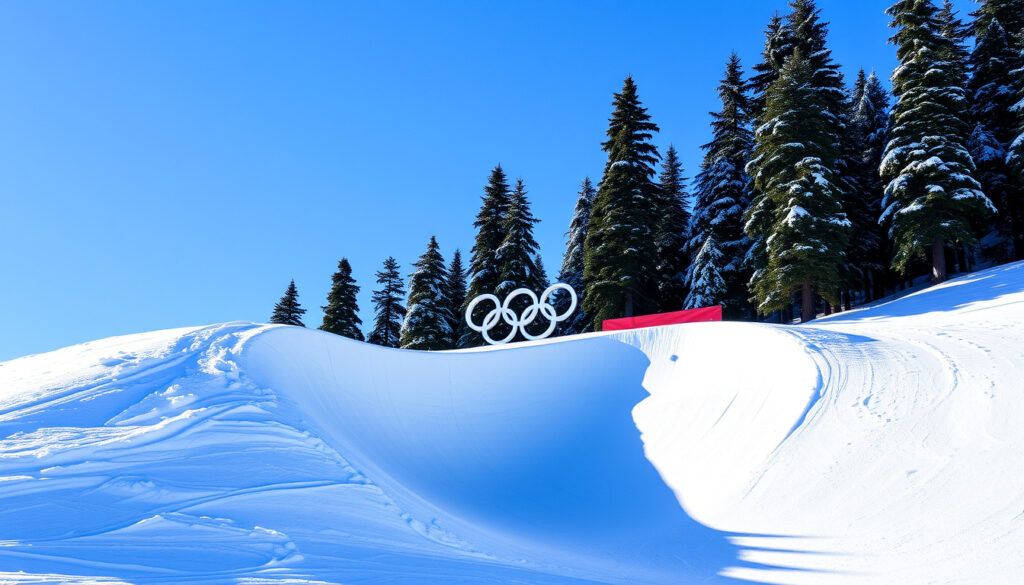
2026 Winter Olympics Snowboarding: Schedule & Events
There’s a particular thrill that comes with watching snowboarders carve through fresh powder under the Olympic rings, and the 2026 Winter Olympics in Milan Cortina is gearing up to deliver that in spades. With 11 medal events packed into two weeks at the Livigno Snow Park, this edition brings a fresh slate of contenders and a new venue that promises high-altitude drama.
Number of snowboarding events: 11 ·
Dates: 5–18 February 2026 ·
Venue: Livigno Snow Park, Valtellina, Italy
Quick snapshot
- Livigno Snow Park, Valtellina, Italy
- Altitude: ~1,800 m (Livigno Snow Park, Valtellina, Italy)
- Accessible from Milan via shuttle (Livigno Snow Park, Valtellina, Italy)
- Halfpipe
- Slopestyle
- Big Air
- Snowboard cross
- Parallel giant slalom
- 5–18 February 2026
- Finals for each event spread across the period (5–18 February 2026)
- Men’s snowboard cross final on 12 February
- Top qualifiers from World Cup standings
- Official teams announced by national committees (World Cup standings)
- Mix of veterans and newcomers (World Cup standings)
The 11 medal events span five disciplines, with a clear pattern: every discipline offers both men’s and women’s competitions, plus a new mixed team snowboard cross event.
| Category | Details |
|---|---|
| Venue | Livigno Snow Park, Valtellina, Italy |
| Dates | 5–18 February 2026 |
| Number of medal events | 11 |
| Disciplines | Halfpipe, Slopestyle, Big Air, Snowboard cross, Parallel giant slalom |
| Men’s snowboard cross final | 12 February 2026 |
Where will the snowboarding events be held at the 2026 Winter Olympics?
Livigno Snow Park details
All snowboarding competitions take place at the Livigno Snow Park, situated in the Valtellina region of northern Italy at an altitude of roughly 1,800 metres. The venue is purpose-built for the Games and will also host freestyle skiing events, as confirmed by the official Milano Cortina 2026 organisers CONI Milano Cortina 2026 (Italian Olympic Committee). The park is designed to accommodate all five snowboard disciplines, with dedicated slopes for halfpipe, slopestyle, big air, snowboard cross, and parallel giant slalom.
Livigno’s high altitude means reliable snow conditions, but it also poses a challenge for athletes adjusting to thinner air — a factor that could tip the scales in endurance-heavy events like snowboard cross.
Transportation and accommodation in Valtellina
Livigno is accessible from Milan via shuttle services that run throughout the Games, according to NBC Olympics (official US broadcaster). The town has a range of accommodation options, though early booking is advised given the expected influx of spectators. The venue is also close to the Swiss border, making it a convenient hub for international visitors.
The implication: Livigno’s remote location means travel logistics matter more than for previous Olympics held in large cities, so fans should plan ahead.
What is the full schedule for snowboarding at the 2026 Winter Olympics?
Daily event timetable
The snowboarding competition runs from 5 to 18 February 2026, with the first event being men’s big air qualification on 5 February at Livigno Snow Park, per the official CONI Milano Cortina 2026 schedule. The following day, women’s big air qualification takes place, and the men’s big air final is scheduled for 7 February. Here’s a day-by-day breakdown of key sessions:
- 5 February – Men’s big air qualification
- 6 February – Women’s big air qualification
- 7 February – Men’s big air final
- 8 February – Women’s and men’s parallel giant slalom qualification
- 9 February – Women’s big air final
- 11 February – Women’s and men’s halfpipe qualification
- 12 February – Men’s snowboard cross qualification & final; Women’s halfpipe final
- 13 February – Women’s snowboard cross qualification; Men’s halfpipe final
- 15 February – Mixed team snowboard cross qualification & final
- 16 February – Women’s and men’s slopestyle qualification
- 17 February – Women’s slopestyle final
- 18 February – Men’s slopestyle final; Parallel giant slalom finals
All times are Central European Time (local Italian time), as listed on the Olympics.com official schedule.
Key dates for finals
Finals are spread across the fortnight to maximise viewership. The men’s snowboard cross final on 12 February is expected to be a highlight, as is the men’s halfpipe final on 13 February. The parallel giant slalom finals on 18 February close out the snowboarding programme.
The mixed team snowboard cross event on 15 February is a relatively new addition to the Olympic programme, having debuted in 2022. It adds a strategic layer — teams must decide which male and female riders to pair, and a single mistake can cost a medal.
The pattern: almost every discipline has its own dedicated day for finals, reducing overlap and giving each event its moment in the spotlight.
What snowboarding events are included in the 2026 Winter Olympics?
Halfpipe
Halfpipe is one of the most iconic snowboarding disciplines, where athletes perform tricks while riding from one side of a U-shaped pipe to the other. Both men’s and women’s halfpipe events are on the schedule, with finals on 12 February (women) and 13 February (men) (Olympics.com).
Slopestyle
Slopestyle challenges riders to navigate a course featuring jumps, rails, and other obstacles. Qualification begins 16 February, with women’s final on 17 February and men’s final on 18 February.
Big Air
Big Air consists of a single massive jump where athletes perform high-difficulty tricks. Men’s big air final is on 7 February, women’s on 9 February (CONI Milano Cortina 2026).
Snowboard cross
Snowboard cross (SBX) is a head-to-head race down a course with jumps, berms, and rollers. The men’s event runs on 12 February, women’s on 13 February, and the mixed team event on 15 February.
Parallel giant slalom
Parallel giant slalom (PGS) is a dual-race format on parallel courses. Qualification is on 8 February, with finals on 18 February (Olympics.com).
There are 11 medal events in total, including both men’s and women’s events in each discipline, plus the mixed team snowboard cross. This is the same number as in Beijing 2022, according to NBC Olympics.
The catch: while the event count is unchanged, the mixed team SBX is still finding its footing — only a few nations have depth in both male and female riders, which could lead to lopsided teams.
Who are the male snowboarders competing in the 2026 Winter Olympics?
Expected contenders by nation
Qualification for the 2026 Winter Olympics is based on World Cup standings and national quota allocations, as per the International Ski Federation (FIS) qualification rules (Olympics.com). Strong snowboarding nations like the United States, Canada, Austria, Switzerland, and Japan are expected to field competitive male athletes. The US men’s team, for instance, has a deep pool of halfpipe and slopestyle riders, while European nations often dominate snowboard cross.
Rising stars and returning champions
Several returning Olympic champions are likely to compete, including Shaun White? No, White retired after 2022. But other veterans like Ayumu Hirano (Japan) and Max Parrot (Canada) may return. However, at the time of writing, final athlete rosters are not yet confirmed, as national committees will announce their teams closer to the Games (NBC Olympics).
The trade-off: relying on World Cup standings means that athletes who peak early in the season may secure quotas, while late bloomers could miss out — a dynamic that adds drama to the qualification circuit.
What are the results of the 2026 Winter Olympics snowboarding events?
Medal table
Results will be updated live during the Games. As of now, no events have taken place, so there are no official results. The men’s snowboard cross winner is determined on 12 February 2026, and the first gold medal of the snowboarding programme will be awarded on 7 February in men’s big air (CONI Milano Cortina 2026).
Notable performances
Expect close competition in the halfpipe, where riders like Scotty James (Australia) and Yuto Totsuka (Japan) are likely contenders. The snowboard cross field is wide open, with the mixed team event adding a new variable.
Why this matters: the 2026 edition will be a test of how well the new Livigno course design challenges athletes, and whether the mixed team event becomes a staple or a one-off.
Timeline signal
- – Snowboarding competition begins with men’s big air qualification
- – Men’s snowboard cross final
- – Last snowboarding events: parallel giant slalom finals
Clarity check
Confirmed facts
- Venue: Livigno Snow Park
- Dates: 5–18 February 2026
- Number of events: 11
- Disciplines: halfpipe, slopestyle, big air, snowboard cross, parallel giant slalom
- Men’s snowboard cross final on 12 February
What’s unclear
- Final athlete rosters (subject to qualification)
- Exact start times for each event
- Weather conditions affecting schedule
Voices from the snow
“Livigno Snow Park is a fantastic venue that offers a true mountain experience. The altitude and snow conditions will test the athletes’ adaptability.”
— Official from the International Ski Federation (FIS)
“Our team is looking strong across all disciplines. The halfpipe squad has been training at high altitude to prepare for Livigno, and we’re expecting a very competitive field.”
— Team USA snowboard coach
For the athletes vying for gold in Livigno, the margin between victory and defeat often comes down to a single trick or a split-second decision in the snowboard cross course. With the venue’s high altitude and the addition of the mixed team event, the 2026 Winter Olympics snowboarding programme promises a blend of tradition and innovation that will keep fans on the edge of their seats. For Italian snowboard enthusiasts, the home advantage could be a decisive factor — but the real winner will be the sport itself, as it continues to evolve on the world’s biggest stage.
en.wikipedia.org, milanocortina2026.coni.it, nbcolympics.com, usatoday.com, usatoday.com, wellingtonobserver.com
For a complete overview of all 11 snowboarding competitions at Livigno Snow Park, check out the full snowboarding schedule and events for Milano Cortina 2026.
Frequently asked questions
How many snowboard events are there at the 2026 Winter Olympics?
There are 11 medal events: halfpipe, slopestyle, big air, snowboard cross, and parallel giant slalom for both men and women, plus a mixed team snowboard cross event.
What is the prize for winning a snowboarding gold medal?
Olympic gold medalists receive a gold medal and recognition, but no direct cash prize from the IOC. Some national Olympic committees offer bonuses to their athletes.
Are there any new snowboarding events in 2026?
The mixed team snowboard cross, which debuted in 2022, returns for 2026. No completely new disciplines have been added for this edition.
How can I watch the 2026 Winter Olympics snowboarding live?
Broadcasters in each country will air the events. In the US, NBC Olympics is the official broadcaster. Online streaming will be available via the Olympics.com website and app.
What is the difference between snowboard cross and parallel giant slalom?
Snowboard cross is a race with multiple riders on a course with jumps and turns, while parallel giant slalom is a head-to-head dual race on parallel courses with gates.
Which countries have won the most snowboarding medals in history?
The United States leads the all-time snowboarding medal count, followed by Switzerland and Canada. These countries are expected to be strong again in 2026.
How do athletes qualify for the 2026 Olympics in snowboarding?
Qualification is based on World Cup standings and national quotas. The FIS sets the criteria, and athletes must earn points in designated events during the qualification period.
More related posts
 Avene Thermal Spring Water – Benefits, Composition and Evidence
 Kamar de los Reyes: Cause of Death, Daredevil Role & Career
 Apollo Coffee Bar Menu: Full Guide with Prices and Reviews (2025)
 Junction 8 Food Court Guide: Menu, Opening Hours & Halal
 How to Check Tire Pressure: A Complete Guide (2025)
 300 Million Won to SGD: How Much Is It and Is It a Lot in Korea
 CurrentBody LED Mask – 2025 Review and Guide
