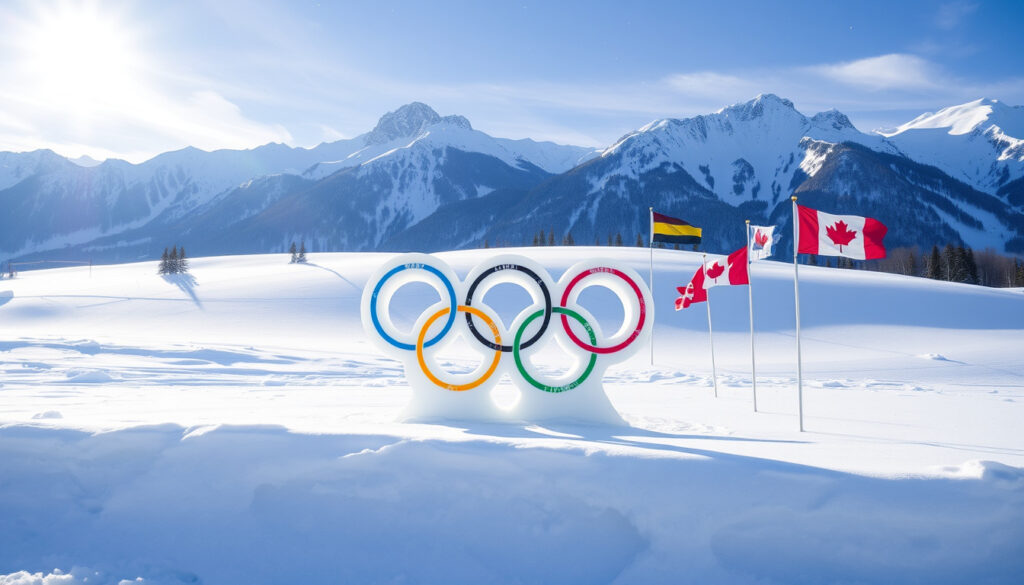
2026 Winter Olympics: Dates, Hosts, Bans, Weather, Next Games
There’s something about an Olympics that splits its heart between a fashion capital and a mountain town that already feels like a story. The 2026 Winter Olympics, running from 6 to 22 February 2026, will open at Milan’s San Siro and close at Verona Arena, with political bans, chemical disqualifications, and shifting snowlines making it one of the most talked‑about editions in years.
Official Name: Milano Cortina 2026 ·
Host Cities: Milan and Cortina d’Ampezzo, Italy ·
Dates: 6–22 February 2026 ·
Number of Disciplines: 16
Quick snapshot
- Games open 6 February 2026 in Milan (Roadtrips (travel booking site))
- Russia and Belarus suspended by IOC (Reuters (international news agency))
- Fluorinated ski wax banned, multiple disqualifications (Grist (environmental news outlet))
- Exact count of disqualified athletes from PFAS testing (Grist)
- Specific weather conditions on closing ceremony day (PBS NewsHour (U.S. public broadcasting))
- 2030 Winter Olympics conditionally awarded to French Alps (Reuters)
- 2034 Winter Olympics awarded to Salt Lake City-Utah (Reuters)
Five key details from the official programme, one pattern: the 2026 Winter Olympics are more spread across northern Italy than any previous edition, reflecting a deliberate shift toward using existing venues and regional infrastructure.
| Label | Value |
|---|---|
| Official Name | Milano Cortina 2026 |
| Host Nation | Italy |
| Edition | XXV Olympic Winter Games |
| Motto | Dream Together |
| Number of Athletes | Approximately 2,900 (expected) |
When and where are the 2026 Winter Olympics?
The 2026 Winter Olympics will be held from 6 to 22 February 2026, with host cities Milan and Cortina d’Ampezzo in Italy (Roadtrips (travel booking site)). The opening ceremony takes place at the iconic San Siro stadium in Milan, while the closing ceremony will be staged at the Verona Arena (Roadtrips).
What are the exact dates?
The Games officially start on and conclude on (Roadtrips). Competition in some events begins before the opening ceremony, but the main 16-day window covers all medal events.
Which cities are hosting?
- Milan – hosts the opening ceremony and ice sports (figure skating, speed skating, ice hockey) at venues like the Mediolanum Forum and the planned Palazzetto dello Sport.
- Cortina d’Ampezzo – hosts alpine skiing, bobsleigh, luge, and skeleton at historic venues such as the Olimpia delle Tofane and the Eugenio Monti track.
- Other clusters – Bormio, Val di Fiemme, and Livigno host additional skiing and snowboard events.
The pattern: Unlike a single-host city model, Milano Cortina 2026 spreads across five major clusters, each with existing or upgraded venues, reducing new construction but adding logistical complexity (Roadtrips).
Which venues will be used for events?
Key venues include San Siro (opening ceremony), Verona Arena (closing ceremony), Milan’s Mediolanum Forum (ice hockey and figure skating), and Cortina’s Olimpia delle Tofane (alpine skiing). The bobsleigh and skeleton events return to the historic Eugenio Monti track after a refurbishment (Roadtrips).
The implication: Spectators must account for travel times of up to 3 hours between clusters, making logistics a key consideration for the regional Games.
Which countries are banned from the 2026 Olympics?
Russia and Belarus are banned from team participation in the 2026 Winter Olympics due to the invasion of Ukraine (Reuters (international news agency)). The IOC upheld the suspension in December 2023, though individual athletes from those nations may compete as authorized neutral athletes under strict conditions.
Why are Russia and Belarus banned?
- The IOC suspended the Russian Olympic Committee and the Belarusian Olympic Committee in response to the war in Ukraine (Reuters).
- The ban applies to all team sports and official delegation representation; neutral athletes must pass an eligibility review and may not display national symbols.
Are any other countries banned?
As of now, no other nations face a full ban. However, the IOC reserves the right to impose sanctions for violations of the Olympic Charter. For example, a Ukrainian athlete was disqualified for a political display on their helmet (Reuters), but this was an individual disqualification, not a national ban.
What is the IOC’s official stance?
IOC President Thomas Bach has repeatedly stated that the suspension aims to “protect the integrity of the Olympic Games and the safety of all participants” (Reuters). The policy is reviewed regularly, but no reversal is expected before 2026.
The neutral athlete route creates a two-tier system: athletes from banned nations can compete, but their achievements won’t appear on national medal counts—a compromise that satisfies neither side fully.
The pattern: The IOC’s stance leaves a gray area for athletes who pass eligibility, making the medal table a contested measure of national performance.
Where are the next Winter Olympics going to be after 2026?
The IOC has already awarded the 2030 and 2034 Winter Olympics. The 2030 Games are conditionally awarded to the French Alps (Reuters), while Salt Lake City-Utah will host in 2034 (Reuters).
When and where is the 2030 Winter Olympics?
The 2030 Winter Olympics are scheduled to be held in the French Alps, with host cities including Nice and possibly multiple Alpine resorts. The official name and exact dates are yet to be finalized (Reuters).
What about the 2034 Winter Olympics?
Salt Lake City-Utah was awarded the 2034 Winter Olympics in 2023, marking a return to a venue that successfully hosted the 2002 Games. The bid emphasized existing infrastructure and community support (Reuters).
Are there any other future bids?
Bids for 2038 and beyond are still in exploratory phases, with potential candidates including Sapporo (Japan) and Vancouver (Canada). The IOC has streamlined the bidding process to prioritize existing venues and climate-reliable locations (PBS NewsHour (U.S. public broadcasting)).
What this means: The next Winter Games after 2026 are locked in for a decade ahead, with France and the United States securing the rights before other regions even begin campaigning.
Who got disqualified from the 2026 Olympics?
Disqualifications at the 2026 Winter Olympics have already begun, centered on two major categories: political displays and chemical violations. At least three athletes have been disqualified for using fluorinated waxes on their equipment (Grist (environmental news outlet)).
What are the PFAS disqualifications?
South Korean cross-country skiers Han Dasom and Lee Eui-jin were disqualified from the women’s sprint event for “banned compounds” on their skis (Grist). Japanese snowboarder Shiba Masaki was also disqualified from the men’s parallel giant slalom for the same fluorinated wax rule (Grist).
How many athletes were affected?
As of early 2025, at least three athletes have been publicly identified, but Grist reports that “multiple nations” were affected, and investigations are ongoing. The exact number remains unclear (Grist).
What is the controversy surrounding PFAS levels?
The fluorine prohibition took effect in 2023 under rules from the International Ski and Snowboard Federation (Grist). Officials test multiple points on each ski or snowboard using Fourier transform infrared spectroscopy; three or more red spots lead to disqualification (Grist). Critics argue that legacy wax residues can trigger false positives, while supporters say the ban is necessary to prevent “forever chemicals” from contaminating snow and water.
The PFAS ban protects the environment but risks penalizing athletes who unknowingly used wax that was legal at the time of application. The strict testing regime means even trace contamination from shared equipment can result in disqualification.
The implication: The testing protocol puts the burden on athletes to prove their equipment is clean, a challenge given the widespread use of fluorinated wax in prior years.
Where is the Winter Olympics 2026 weather?
Weather conditions for the 2026 Winter Olympics are a growing concern, particularly for outdoor events in the Dolomites. Climate Central reports a 50–60% chance of above-average temperatures in February 2026 for the region (Climate Central (climate science research group)).
What is the typical weather in the Dolomites in February?
The Dolomites typically see cold, snowy conditions in February, with average temperatures ranging from -5°C to 2°C at altitude. However, climate change has made February warmth in Cortina at least three times more likely than it was a century ago (PBS NewsHour (U.S. public broadcasting)).
How might weather affect the closing ceremony?
The closing ceremony at the open-air Verona Arena could be affected by rain or unseasonable warmth. While the Arena has a roof, open sides mean temperature swings are still a factor. Climate Central’s long-range outlook suggests a 60–70% chance of above-average temperatures in March (Climate Central), which could influence conditions leading into the ceremony.
Are there climate change concerns for the games?
Climate change poses a long-term threat to winter sports. According to PBS, 87 of 93 potential Winter Olympic host cities (94%) are still rated as having reliable climate conditions (Climate Central), but that number is declining. The Italian Meteorological Service has warned that snow-making will be critical for several events, especially at lower altitudes (PBS NewsHour).
Why this matters: For the Dolomites, a February without reliable snow isn’t just a weather headache—it’s a threat to the region’s identity as a winter sports destination, with implications for tourism long after the Olympic flame is extinguished.
Timeline: Key Dates for Milano Cortina 2026
- – IOC awards the 2026 Winter Olympics to Milan and Cortina d’Ampezzo (Roadtrips)
- December 2023 – IOC suspends Russia and Belarus from participation (Reuters)
- 2024–2025 – Venue construction and test events take place across all clusters
- – Opening ceremony at San Siro, Milan
- – Closing ceremony at Verona Arena
The pattern: The timeline shows a clear progression from award to enforcement, with the Russia suspension being the most consequential political decision.
What we know and what remains uncertain
Confirmed facts
- Dates: 6–22 February 2026 (Roadtrips)
- Host cities: Milan and Cortina d’Ampezzo (Roadtrips)
- Russia and Belarus are banned from team participation (Reuters)
- Disqualifications related to PFAS have occurred (at least 3 athletes) (Grist)
- Opening ceremony at San Siro, closing at Verona Arena (Roadtrips)
What’s unclear
- Exact number of disqualified athletes
- Specific weather conditions during the closing ceremony
- Long-term impact of climate change on snow reliability
- Whether the neutral athlete participation will expand
- Exact number of neutral athletes from Russia and Belarus
The takeaway: The clear facts anchor the article, but the uncertainties highlight the dynamic nature of the Games.
Voices from the games
“The suspension of Russia and Belarus is a measure to protect the integrity of the Olympic Games and the safety of all participants.”
IOC President Thomas Bach (Reuters)
“The fluorine prohibition took effect in 2023 and applies to events governed by the International Ski and Snowboard Federation. Officials test multiple points on each ski or snowboard using Fourier transform infrared spectroscopy; three or more red spots lead to disqualification.”
FIS spokesperson as reported by Grist
“Warming has made February warmth in Cortina at least three times more likely due to climate change. This is a clear signal that winter sports need to adapt.”
Climate scientist quoted by PBS NewsHour
For Italy, the 2026 Winter Olympics represent both a triumph of alpine tradition and a confrontation with modern realities. The choice for spectators and athletes is clear: embrace the spectacle, or watch the snowlines recede.
rg.org, facebook.com, facebook.com, theinvadingsea.com, facebook.com, reddit.com
Frequently asked questions
How many athletes are expected to compete in the 2026 Winter Olympics?
Approximately 2,900 athletes are expected, across 16 disciplines.
What is the official mascot of Milano Cortina 2026?
The mascot is named “Milo” (a stylized snowdrop flower) and “Tina” (a little stoat), designed to represent the two host cities.
How can I buy tickets for the 2026 Winter Olympics?
Tickets will be sold through the official Milano Cortina 2026 website. Pre-sales are expected to begin in late 2025.
Which new sports are included in the 2026 Winter Olympics?
No new sports have been added for 2026, but ski mountaineering has been proposed for 2030.
Will there be a torch relay? Where does it start?
Yes, the torch relay is planned to start in Olympia, Greece, and travel through Italy before reaching Milan.
How are the venues distributed between Milan and Cortina?
Milan hosts ice sports and the opening ceremony; Cortina hosts snow sports including alpine skiing, bobsleigh, and skeleton. Additional events are in Bormio, Val di Fiemme, and Livigno.
What are the security measures for the 2026 Winter Olympics?
Enhanced security including temporary flight restrictions over major venues and limited traffic zones in host cities are in place (Universal Weather (aviation planning guide)).
More related posts
 Science Centre Singapore Reviews: Worth It? Costs, Time & Tips
 Translate English to Thai: Best Tools & Common Phrases
 Batam View Beach Resort – Reviews Prices Location Guide
 F1 Singapore 2025 Concert: Lineup, Schedule, Tickets & Venue
 Carlton City Hotel Singapore: Location, Airport Distance & More
 How to Check Tire Pressure: A Complete Guide (2025)
 Blue Line MRT Map: Bangkok’s 43 Stations & Fares 2024
 Kung Pao Chicken Near Me: Flavor, Health & Ordering Tips
