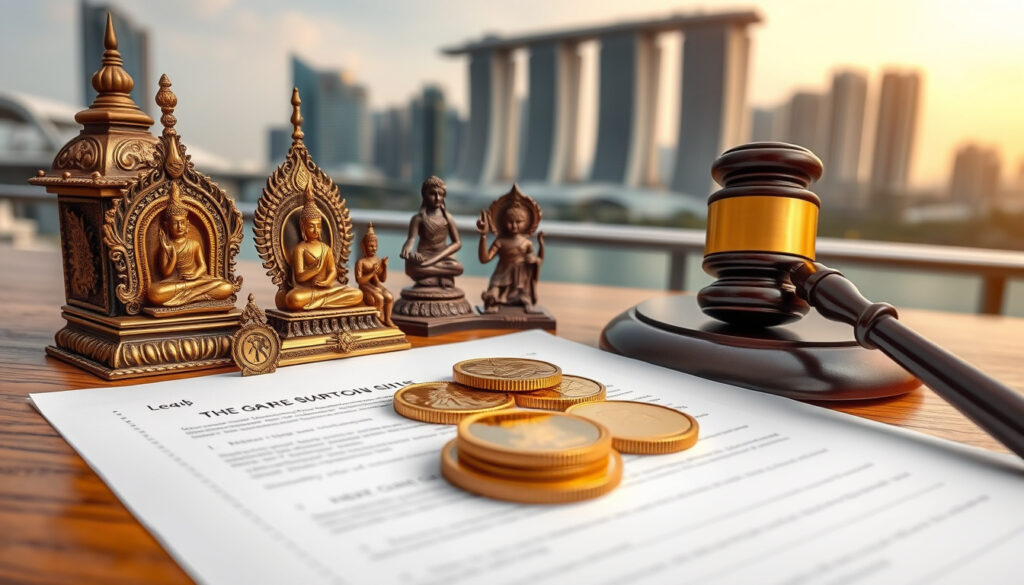
Singapore Amulet Resale Lawsuit – No Documented Court Cases
Singapore’s market for religious artefacts and collectables operates largely without published court precedents specifically addressing amulet resale disputes. Research into publicly available records, including court databases and news archives, found no documented lawsuit involving the resale of Thai or Buddhist amulets in Singapore’s courts. This absence of specific case law creates uncertainty for buyers and sellers navigating what is otherwise a thriving collector’s market. The closest documented parallel involves a 2022 luxury goods case, which offers limited insight into how amulet-specific disputes might be handled under existing consumer protection frameworks.
The gap in verified data does not mean the market operates without legal guardrails. Singapore’s Consumer Protection (Fair Trading) Act applies to all goods sold within the jurisdiction, regardless of whether the items are mainstream products or niche collectables. Understanding how these general provisions might interact with specialist resale transactions requires examining both the regulatory structure and the documented patterns in related goods disputes.
What the Available Records Show
No documented lawsuit specifically concerning amulet resale was identified in public court records as of January 2025.
Thai and Buddhist amulets circulate through informal channels, online forums, and specialist dealers across Singapore.
Consumer Protection (Fair Trading) Act governs misrepresentation claims for goods sold in Singapore.
No established legal precedent clarifies how courts would assess authenticity claims or pricing disputes involving amulets.
Key Points to Understand
- No amulet-specific lawsuit found: Publicly accessible court records contain no documented case involving Buddhist or Thai amulet resale disputes in Singapore.
- General consumer laws apply: The Consumer Protection (Fair Trading) Act covers misrepresentation in the sale of any goods, including collectables.
- Authenticity claims carry risk: Sellers who misrepresent the origin, blessing history, or authenticity of amulets may face civil claims.
- Value disputes are common: The high valuations placed on certain amulets create opportunities for disagreements over worth and condition.
- Online platforms host most transactions: Social media groups and online marketplaces serve as primary venues for amulet trading in Singapore.
- Limited regulatory oversight: Unlike financial products, religious artefacts and collectables fall outside specialist regulatory schemes.
- Documentation varies widely: Provenance records for amulets range from detailed certificates to no documentation whatsoever.
| Fact | Details |
|---|---|
| Documented amulet lawsuits | None found in public Singapore court records |
| Related Thai goods case | 2022 luxury goods scam involving Thai national Pansuk Siriwipa |
| Relevant legislation | Consumer Protection (Fair Trading) Act (Cap. 52A) |
| Enforcement body | Competition and Consumer Commission of Singapore (CCCS) |
| Common amulet types | Phra Pidta, Somdej, LP Toh, and other Thai Buddhist artefacts |
| Typical transaction venues | Online forums, social media groups, informal dealer networks |
| Pricing range noted | From tens to hundreds of thousands of dollars for rare specimens |
The absence of documented cases does not confirm that no amulet disputes have occurred. Many consumer disagreements are resolved privately or through mediation without reaching court. The findings reflect searches of publicly available court records and verified news sources.
Legal Framework for Goods Resale in Singapore
Consumer Protection (Fair Trading) Act
The Consumer Protection (Fair Trading) Act establishes the primary legal framework governing goods sold to consumers in Singapore. This legislation prohibits specific unfair practices, including misrepresentation about the nature, quality, or authenticity of goods. While the Act does not single out any particular product category, its provisions would apply to anyone selling amulets or other religious artefacts if misrepresentation can be demonstrated.
Under this framework, a seller who falsely claims an amulet was blessed by a specific monk, originates from a particular temple, or possesses documented provenance that cannot be verified may be liable for misrepresentation. The Act empowers consumers to seek remedies through the Small Claims Tribunals for disputes involving lower values, or through the courts for more substantial matters.
Small Claims Tribunals
Singapore’s Small Claims Tribunals handle disputes where the claimed amount does not exceed the prescribed limit, currently set at $20,000 for claims related to goods and services. This venue offers a streamlined process without the formality of regular court proceedings, making it accessible for buyers who believe they have been misled in amulet transactions. Claimants must demonstrate that a misrepresentation occurred and that they suffered financial loss as a result.
Civil Litigation Options
For higher-value disputes exceeding Small Claims Tribunal limits, parties may pursue civil litigation through the District Court or High Court. A plaintiff would need to establish the elements of misrepresentation: that a false statement was made, the seller knew or ought to have known it was false, the buyer relied on the statement, and damage resulted. Proving these elements in amulet cases may prove challenging, particularly where authenticity claims involve specialized knowledge or unverifiable provenance.
Documenting all communications, retaining certificates of authenticity, and obtaining photographs of items before purchase can strengthen a buyer’s position should a dispute arise. Sellers should similarly maintain records demonstrating the basis for any claims they make about provenance or blessing history.
Related Case: Lessons from the Luxury Goods Sector
While no amulet-specific lawsuit appears in Singapore’s documented court records, the case of Pansuk Siriwipa provides relevant context about how courts handle goods fraud involving Thai nationals operating in Singapore. This matter, though concerning luxury bags and watches rather than religious artefacts, illustrates patterns in misrepresentation cases that may inform how similar disputes could be approached.
Pansuk Siriwipa, a Thai national, operated businesses under the names Tradenation and Tradeluxury. Between March and June 2022, she collected approximately $24.8 million through Tradenation and around $947,000 through Tradeluxury for orders that were never fulfilled. Police reports began arriving in May 2022, with a total of 187 complaints filed by August of that year.
The case proceeded through Singapore’s courts, with Pansuk pleading guilty on 21 October 2024 to 30 charges encompassing cheating, fraudulent trading, and money laundering. On 29 October 2024, she received a sentence of 14 years’ imprisonment. The court considered a total of 180 charges, with 150 additional charges taken into account during sentencing. A co-accused person’s case remained pending at the time of the sentence.
The scale of this case differs substantially from typical amulet transactions, yet the underlying issue mirrors concerns in the collectables market: sellers making claims about goods that cannot be substantiated, buyers remitting payment based on those representations, and goods or value that fail to materialize. While authentication in luxury goods cases may involve brand authentication experts and serial number verification, amulet authenticity often depends on specialist knowledge that may be less standardized.
Understanding the Amulet Market in Singapore
How Transactions Occur
The market for Thai and Buddhist amulets in Singapore operates through multiple channels. Online platforms and social media groups serve as primary venues, connecting collectors with sellers who range from casual individuals downsizing collections to established dealers with physical premises. Telegram groups, Facebook communities, and Carousell listings feature prominently in the ecosystem.
Transactions may occur entirely online, with photographs and descriptions provided by sellers and payment processed through bank transfers or digital payment services. Some buyers prefer to examine items in person before committing, meeting sellers at locations they mutually arrange. High-value transactions occasionally involve escrow arrangements or verification by recognized experts in Thai Buddhist artefacts.
Factors Affecting Value
Amulet valuations in the Singapore market depend on multiple factors that may be difficult for general buyers to assess independently. The reputation of the monk who created the piece, the age and condition of the artefact, the materials used in its construction, and its documented history all contribute to market value. Rare specimens from celebrated monks such as Somdej Phra Phutthacharn or LP Koon can command prices reaching into hundreds of thousands of dollars.
This complexity creates opportunities for both legitimate transactions and potential misrepresentation. A buyer without specialized knowledge may struggle to verify claims about an amulet’s origin or blessing history, relying instead on seller representations that may or may not be accurate.
Authenticity Challenges
Unlike branded consumer goods, where authenticity can often be verified through serial numbers, holographic labels, or authorized repair centres, amulet authenticity typically depends on expert opinion and provenance documentation. Even certificates purporting to verify authenticity may be forged, creating a challenging verification environment for buyers.
Timeline of Events and Case Development
The following timeline draws from publicly documented cases and regulatory developments relevant to consumer protection in Singapore. For amulet-specific disputes, this information represents the broader legal context rather than verified amulet case data.
- March to June 2022: Payments collected by Tradenation and Tradeluxury for unfulfilled luxury goods orders, totalling approximately $25.8 million across both entities.
- May to August 2022: 187 police reports filed by victims of the luxury goods scheme operated by Thai national Pansuk Siriwipa.
- October 2024: Pansuk Siriwipa pleads guilty to 30 charges of cheating, fraudulent trading, and money laundering before the Singapore courts.
- October 2024: Sentencing hearing concludes with Pansuk receiving 14 years’ imprisonment. The court considered 150 additional charges during sentencing.
- Post-sentencing: Co-accused proceedings remain ongoing at time of reporting.
- Current period: No documented court cases specifically addressing amulet resale disputes have emerged in publicly accessible Singapore court records.
The timeline above reflects available case documentation. The absence of amulet-specific entries does not confirm that no such disputes have occurred privately or through mediation. Singapore’s court records may contain sealed proceedings or cases not yet reported in news archives.
What Is Known and What Remains Unclear
Given the limited documented evidence specifically addressing amulet resale lawsuits in Singapore, clarity requires distinguishing between established facts and areas where uncertainty persists.
| Established Information | Uncertain or Unverified |
|---|---|
| Consumer Protection (Fair Trading) Act applies to goods sold in Singapore | Specific amulet resale lawsuit documented in Singapore courts |
| Small Claims Tribunals handle disputes up to $20,000 | Volume of amulet disputes handled through alternative dispute resolution |
| Thai nationals have faced prosecution for goods fraud in Singapore | Whether authenticity disputes involving amulets have reached courts |
| CCCS oversees consumer protection enforcement | Whether regulatory guidance specifically addressing amulet sales exists |
| The amulet collector market operates in Singapore | Standard practices for authenticity verification in the market |
Market Context and Why This Matters
Singapore occupies a distinctive position in the regional market for Thai Buddhist amulets. The city-state’s multicultural population includes significant communities with cultural connections to Thailand and Buddhist traditions, creating demand for religious artefacts ranging from everyday blessing items to highly prized collector’s pieces. This demand attracts sellers ranging from individuals liquidating inherited collections to professional dealers operating through established businesses.
The intersection of cultural significance, collector value, and specialized knowledge creates a market environment where buyers may face information asymmetries. Sellers who possess deeper knowledge about provenance, authenticity markers, and market values hold advantages that buyers may struggle to overcome without comparable expertise. These dynamics, common in many collectables markets, create conditions where disputes may arise when buyer expectations diverge from actual item characteristics.
Without documented court cases specifically addressing amulet disputes, the legal community lacks guidance on how courts would approach questions of misrepresentation in this specialized market. Would judges apply the same standards used for luxury goods? How would they assess expert testimony about authenticity? Would they recognize cultural or religious claims about an amulet’s supposed powers or blessings? These questions remain unanswered in the publicly available legal record.
Sources and Regulatory References
“The Consumer Protection (Fair Trading) Act prohibits unfair practices in the course of business. A person who employs any practice that is wrongful according to the laws of Singapore, including the common law, shall be liable.”
Competition and Consumer Commission of Singapore
“The accused had collected approximately $25 million from 187 victims through two companies. She had represented to victims that she could supply luxury goods that were not delivered.”
Singapore Courts media report on Pansuk Siriwipa case
Referenced Sources
- Competition and Consumer Commission of Singapore (CCCS)
- Singapore Judiciary
- The Straits Times: 14 years jail for Thai woman in $32m luxury goods scam
- Singapore Police Force
Summary and Practical Considerations
The available evidence indicates that no publicly documented lawsuit specifically addressing amulet resale disputes exists in Singapore’s court records as of January 2025. This absence creates both opportunities and risks for market participants. On one hand, the lack of adverse case law suggests that amulet sellers operating legitimately face limited documented legal threats. On the other hand, the absence of precedent means courts have not articulated standards that could guide market participants toward clearer practices.
For buyers, the practical implications include the importance of conducting due diligence before committing funds to high-value purchases. Verifying seller reputation, seeking expert opinions where available, and documenting all communications and transaction details provides the best foundation for protecting interests. For sellers, accuracy in representing item characteristics and maintaining documentation supporting any authenticity claims reduces exposure to misrepresentation allegations.
The broader legal framework governing goods sales in Singapore does provide mechanisms for addressing fraudulent conduct, as demonstrated by the successful prosecution of luxury goods fraud. These same principles would theoretically apply to amulet transactions, though the specialized nature of these goods may create practical challenges in establishing misrepresentation or quantifying losses. Market participants navigating this space should consider seeking legal advice before engaging in high-value transactions.
Frequently Asked Questions
Is reselling amulets illegal in Singapore?
No law specifically prohibits the resale of amulets or Buddhist artefacts. However, sellers must comply with general consumer protection laws prohibiting misrepresentation about goods.
What can I do if I believe an amulet was misrepresented to me?
You may file a claim with the Small Claims Tribunal if the amount is $20,000 or less, or pursue civil litigation for higher amounts. Document all evidence including communications, photographs, and payment records.
Has anyone been prosecuted for amulet fraud in Singapore?
No documented case of amulet-specific prosecution appears in publicly accessible Singapore court records. General goods fraud laws apply, as demonstrated by a 2024 luxury goods case resulting in a 14-year sentence.
What is the Consumer Protection (Fair Trading) Act?
This legislation prohibits unfair practices in the sale of goods and services, including misrepresentation about an item’s nature, quality, or authenticity. It is administered by the Competition and Consumer Commission of Singapore.
Are Thai amulet valuations legally protected?
No laws regulate amulet valuations. Prices reflect market agreements between buyers and sellers. Disputes over value alone may not constitute misrepresentation unless accompanied by false claims about an item’s characteristics.
Where can I verify amulet authenticity in Singapore?
No government-run verification service exists. Expert authentication typically relies on private specialists with knowledge of Thai Buddhist artefacts. Exercise caution with certificates provided by sellers.
What happened in the Thai luxury goods case?
In 2022, Thai national Pansuk Siriwipa collected approximately $25 million from 187 victims for luxury goods that were never delivered. She pleaded guilty in October 2024 and received a 14-year prison sentence.
Should I seek legal advice before buying expensive amulets?
For high-value transactions, consulting a lawyer familiar with consumer protection matters may provide clarity on your rights and risks. Document all aspects of the transaction regardless of purchase amount.
More related posts
 Parcels Jurong West Void Deck: Resident vs Delivery Worker
 Pakistan vs Australia 1st T20I Scorecard 2026: Result
 Happy Kanako’s Killer Life: Episodes & Where to Watch
 Raffles Medical Loyang Point: Fees, Appointments, Location Guide
 ICA Change of Address Singapore: Step-by-Step Guide 2025
 Cheap Chicken Rice Singapore: Where to Find Budget Meals
 South Korea Plane Crash 2024: Jeju Air Flight 2216 Cause
 Kings vs Super Kings: Head-to-Head Record, History & Key Players
