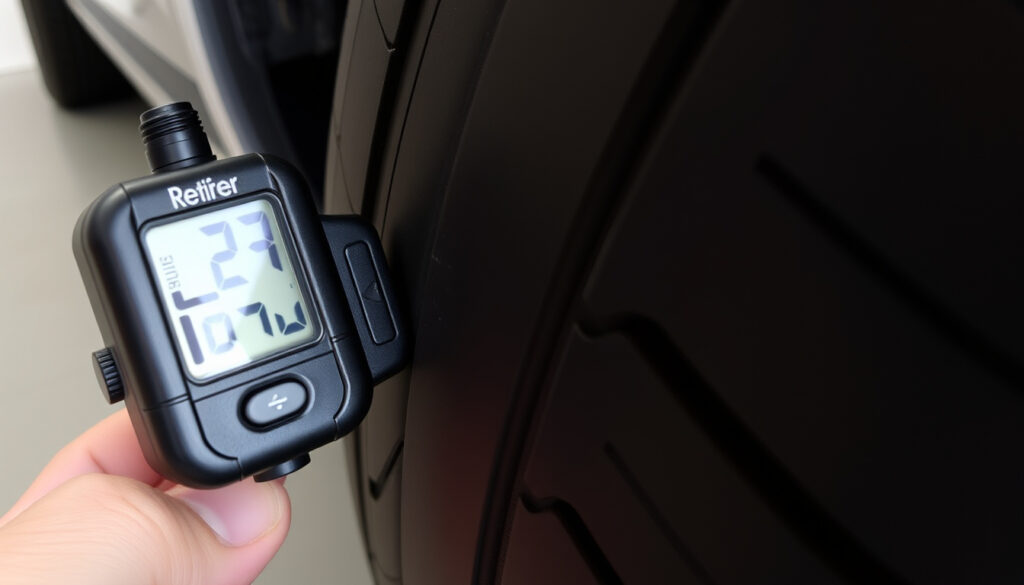
How to Check Tire Pressure: A Complete Guide (2025)
Few car maintenance tasks are as easy to overlook — or as costly to ignore — as checking your tire pressure. Your tires are the only part of your car that touches the road, yet most drivers wait for a dashboard warning light before giving them a second thought. This guide walks you through every method for checking tire pressure, from the classic manual gauge to your car’s TPMS display, so you can keep your tires in the sweet spot between underinflated and overinflated.
Recommended tire pressure: 30–35 PSI for most passenger cars · Fuel economy impact: Underinflation reduces fuel economy by 0.2% per 1 PSI drop · TPMS mandate: Required in all US vehicles since 2008 · Check frequency: Monthly and before long trips
Quick snapshot
- Accurate and reliable for any vehicle (Tire Agent (tire education site))
- Convenient real-time reading, but may not show exact PSI (YouTube (automotive tutorial))
- Quick and accessible, but built-in gauges may be inaccurate (Tire Pressure Tips (consumer tire advice))
- Once a month and before long trips; on cold tires (Edmunds (automotive consumer guide))
A quick reference for tire pressure facts:
| Label | Value |
|---|---|
| Recommended PSI | 30–35 PSI for most passenger cars |
| Check frequency | Monthly and before long trips |
| TPMS mandatory | Since 2008 in US |
| Fuel economy impact | Underinflation can reduce fuel economy by 0.2% per 1 PSI drop |
What is the correct way to check tire pressure?
The door jamb sticker is the manufacturer’s official reference for recommended tire pressure.
— Edmunds (automotive consumer guide)
Using a tire pressure gauge
- Get the right tool. A stick-type, digital, or dial gauge all work. Tire Agent (tire education site) notes that a manual gauge is the most reliable way to get an exact reading.
- Start with cold tires. Tires heat up as you drive, raising pressure. For the most accurate reading, check when the car has been parked for at least three hours, according to Tire Agent (tire education site).
- Remove the valve cap and press the gauge firmly onto the valve stem. You’ll hear a small hiss of air — that’s normal. Hold it steady until the reading stops moving.
- Compare to the recommended PSI. That number is on the driver’s door jamb sticker, not on the tire sidewall. Edmunds (automotive consumer guide) points out that the door jamb is the manufacturer’s official reference.
- Add or release air as needed. Inflate to the recommended PSI — or if you overshoot, press the center pin to let air out.
Steps to check tire pressure
- Park the car on a level surface and let it sit for at least 3 hours — or check first thing in the morning before driving.
- Locate the recommended PSI on the driver’s door jamb sticker.
- Unscrew the valve cap from the first tire.
- Press a tire pressure gauge firmly onto the valve stem until you get a reading.
- Write down the PSI and compare it to the recommended value.
- Repeat for all four tires — and the spare if it has a sensor, as AAA (motoring organization) advises.
When to check tire pressure
Check once a month and before any long road trip. Seasonal temperature swings also matter: cold weather drops tire pressure by about 1 PSI for every 10°F temperature drop. If a tire is more than 10% below the recommended pressure, add air promptly, as noted by automotive tutorial sources.
How do I check my tyre pressure at home?
Checking tire pressure without a gauge
If you don’t have a gauge, a gas station air pump with a built-in gauge is your next best option. Tire Pressure Tips (consumer tire advice) notes these are widely available and quick to use — though the gauge accuracy varies. Visual inspection alone is not reliable. A tire can lose up to 30% of its pressure before it looks flat.
The “penny test” or “coin test” for tread depth tells you about wear, not pressure. Don’t rely on it.
Using a digital tire inflator
A portable 12V digital inflator is a solid investment. Most let you set a target PSI and automatically stop when reached. Many also display the current pressure before you start inflating. This is hands-down the easiest at-home method, and you get a precise reading without a separate gauge.
At-home tire pressure checklist
- Handheld gauge (digital or stick) — about $10
- Portable inflator with digital display — about $30–$50
- Gas station air pump — free or $1.50
- Door jamb sticker for your vehicle’s specific PSI
What this means: checking at home is cheap and takes 10 minutes. The hardest part is remembering to do it.
Can you check tire pressure on the dashboard?
Understanding TPMS
Tire Pressure Monitoring Systems (TPMS) have been mandatory on all new US vehicles since 2008, per NHTSA (US safety regulator). The system uses sensors in each tire to detect when pressure drops 25% below the recommended value — and then lights up the dashboard warning light.
A manual gauge is the most reliable way to get an exact reading.
— Tire Agent (tire education site)
Dashboard tire pressure display
Many newer cars go further: they show individual tire pressures on the dashboard or infotainment screen in real time. Automotive tutorial sources explain that drivers can often navigate to a TPMS menu using steering-wheel or dashboard buttons. If your car has this, it’s the most convenient way to monitor pressure daily.
TPMS warning light meanings
- Solid light: One or more tires are at least 25% underinflated. Check with a gauge. Pirelli (tire manufacturer) advises assuming the tire is underinflated until proven otherwise.
- Flashing light: TPMS system malfunction — not a tire pressure issue, but needs service.
The catch: TPMS is an alert system, not a precision measurement tool. Edmunds emphasizes that you still need to verify with a manual gauge, especially if sensor accuracy is in doubt.
The trade-off: dashboard convenience saves time, but it doesn’t replace a monthly physical check.
What is the correct PSI for my tires?
Where to find recommended PSI
The manufacturer’s recommended PSI is listed on a sticker inside the driver’s door jamb. On some cars, you’ll also find it in the glove box, fuel filler door, or owner’s manual. Edmunds (automotive consumer guide) states that the door jamb is the primary reference — never the number on the tire sidewall, which is the tire’s maximum safe pressure, not the recommended one.
Is 40 PSI too high?
For most passenger cars, 40 PSI is above the recommended 30–35 PSI range. Overinflated tires have a smaller contact patch, which reduces traction and causes the center of the tread to wear faster. Some larger vehicles or performance cars may require higher pressures — check your specific sticker.
Safe PSI range
Understanding how PSI levels affect your driving:
| PSI relative to recommended | Effect on tire | Risk |
|---|---|---|
| 10+ PSI low | Bulging sidewalls, overheating | Blowout, poor handling, reduced fuel economy |
| 5–10 PSI low | Increased rolling resistance | Lower fuel economy, uneven wear |
| At recommended | Even tread contact, optimal grip | Safe, efficient |
| 5+ PSI high | Reduced contact patch, center wear | Less traction, harsh ride |
Why this matters: staying within 2 PSI of the recommended value gives you the best balance of safety, tire life, and fuel economy.
How do I tell if my tire pressure is low?
Signs of low tire pressure
- TPMS light comes on. This is the most reliable indicator. AAA (motoring organization) says to check all four tires (and the spare) when this light appears.
- Car pulls to one side. Uneven pressure causes the vehicle to drift.
- Vibration in the steering wheel. Low pressure can cause a soft, wobbly feel.
- Reduced fuel economy. Underinflation increases rolling resistance — by 0.2% per 1 PSI drop, according to Energy.gov (US Department of Energy).
TPMS alert
When the light pops up while driving, TyreSafe (UK tire safety organization) recommends stopping in a safe place and manually checking all tire pressures against the manufacturer’s settings. If a tire is slightly low, AAA says a nearby gas station works. If it’s significantly underinflated or flat, call for roadside assistance or use a portable inflator.
Visual and handling clues
Don’t rely on how a tire looks. Modern radial tires can lose a lot of air without appearing flat. The most common clue drivers notice first is a drop in fuel economy or a subtle pull during highway driving. Confirmation always comes from a gauge.
The pattern: trust your TPMS, confirm with a gauge, and respond promptly — because a 10% pressure drop can go unnoticed for weeks, damaging both the tire and your wallet.
A monthly five-minute check with a $10 gauge saves you from a $200 tire replacement and keeps your fuel economy from slipping. The habit costs nearly nothing; the neglect can cost you a blowout at highway speed.
Dashboard TPMS displays are convenient, but the sensor accuracy can drift over time. If your dashboard reading seems off — or if the temperature just dropped 20°F — break out the manual gauge. One in five drivers with TPMS still has underinflated tires, according to NHTSA data.
youtube.com, youtube.com, youtube.com, tirepressuretips.com, tyresafe.org, youtube.com, rhinousainc.com, tirepressuretips.com, tirereview.com
Frequently asked questions
How often should I check tire pressure?
Once a month and before any long road trip. Seasonal temperature changes also warrant a check — pressure drops roughly 1 PSI per 10°F drop.
Can I drive with low tire pressure?
Briefly — but only to get to a gas station or safe location. Driving on underinflated tires generates excess heat and can cause a blowout. If a tire is significantly low, call for roadside assistance.
What happens if tire pressure is too high?
Overinflation reduces the tire’s contact patch, meaning less traction and center-tread wear. You’ll also feel a harsher ride. Check against the door jamb sticker — not the tire sidewall maximum.
Do I need to check tire pressure in winter?
Yes — more often, in fact. Cold weather drops tire pressure, and your TPMS light may come on after the first hard frost. A quick monthly check (with a gauge) keeps you ahead of the seasonal drop.
Why does tire pressure drop in cold weather?
Air contracts when it’s cold. For every 10°F drop in temperature, your tires lose about 1 PSI. That’s normal — just inflate back to the recommended level.
How do I check tire pressure on a car with no gauge?
Use a gas station air pump with a built-in gauge, or buy a $10 handheld gauge. Avoid relying on visual inspection — you can’t see a 20% pressure loss.
Is it safe to check tire pressure at a gas station?
Generally yes, but gas station gauges can be worn or inaccurate. Use them for a rough check, but consider verifying with your own gauge at home. Pull the hose hard enough to get a good seal, and don’t trust the first reading — inflate briefly and recheck.
What is the difference between PSI and bar?
PSI (pounds per square inch) and bar are both units for measuring pressure. 1 bar is approximately 14.5 PSI. Most US vehicles use PSI; European and Asian specs often use bar or kPa. Your door jamb sticker will show the correct unit.
Understanding tire pressure keeps you safe and saves money.
For the driver who wants a complete system: invest in a digital inflator with auto-shutoff, learn your dashboard TPMS menu, and check pressure cold once a month. The alternative — a blowout at 70 mph, or a premature tire replacement — is a far more expensive lesson.
More related posts
 6-Month T-Bill Auction: How to Buy, Yields & Costs
 Sri Mariamman Temple Singapore: History, Dress Code, Timings
 Arsenal Latest Transfer News: Rumors & Source Credibility
 Sales of Balance Flat 2025 – Stable Trends and Buyer Insights
 Chinese New Year Singapore 2026: Events, Tips & What to Do
 Best Free English to Indonesian Translation Tools
 Standard Chartered Journey Credit Card – Benefits, Miles & Fees
 Google Translate English to Burmese: Accuracy & How to Use
