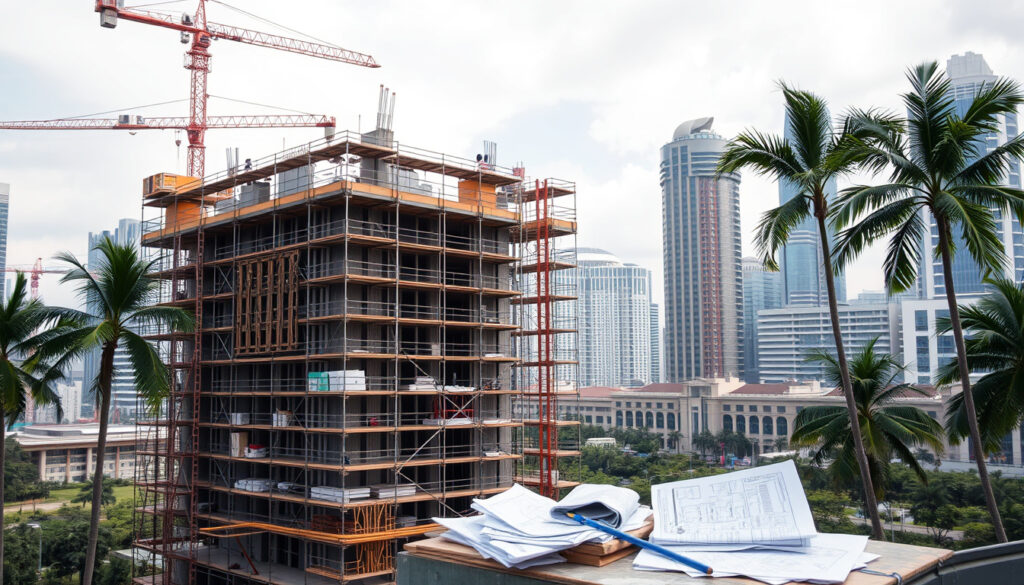
A&A Works: Definition, Examples in Singapore Construction
If you’ve ever hired a contractor for a home project in Singapore, you’ve probably encountered the phrase “A&A works” without fully understanding what it means. The term sounds bureaucratic, but knowing exactly what counts as Additions and Alterations can mean the difference between a smooth renovation and a legal headache. Here’s what every Singapore homeowner and property manager needs to know.
Primary Meaning: Additions and Alterations ·
Key Contexts: Singapore HDB and BCA ·
Examples Include: New extensions, linking buildings ·
Governing Sites: HDB, BCA ·
Alternative to: Full rebuilding
Quick snapshot
- A&A stands for Additions and Alterations (HDB Official)
- BCA Licensed Builder is legally required for structural A&A works (Ministry of National Development)
- Exact cost ranges for different property types
- Specific permit timelines beyond general guidance
- Approval phase: 2–4 months for URA/BCA processes (Met Interior)
- Total project: 8–16 months from start to finish (Met Interior)
- QP submits plans to BCA/FSSD before any physical work begins (HDB Official Flowchart)
- HDB issues in-principle approval after BCA clearance (HDB Official Flowchart)
The table below consolidates the essential facts about A&A works for quick reference.
| Label | Value |
|---|---|
| Full Form | Additions and Alterations |
| Primary Use | Modify existing buildings |
| Singapore Authorities | HDB, BCA, URA, FSSD |
| Key Professional | Qualified Person (QP) |
| Key Benefit | Smarter than full rebuilding |
What does A&A stand for in construction?
A&A stands for Additions and Alterations. It refers to structural renovation works that modify, extend, or enhance a building without complete demolition or reconstruction. In Singapore’s regulatory context, this covers everything from adding a new room to linking two existing structures.
Common meanings of A&A
The term describes any work that changes a building’s footprint, structure, or use. This includes roof modifications, new staircases, additional partitions, and heritage building renovations. The common thread is that the work changes what’s there without starting from scratch.
The scope of A&A works in Singapore can vary significantly between HDB properties, private condos, and landed homes. Each category has different approval requirements and timelines.
Property owners should note that these variations affect which government agencies must be consulted before any work begins.
A&A in Singapore context
In Singapore, A&A works fall under the purview of the Building and Construction Authority (BCA), a statutory board under the Ministry of National Development regulating the building and construction industry (Structures.com.sg regulatory guide). The specific requirements depend on whether the property is public housing or private, and whether the work affects structural safety.
“An HDB contractor is registered with the HDB specifically for renovations in HDB flats. A BCA Licensed Builder is legally licensed under the Building Control Act for structural A&A works in all properties.” (Structures.com.sg expert guide)
“Approval from BCA is only required for Addition and Alteration (A&A) works that may impact the structural safety of buildings.” (Ministry of National Development official statement)
What Is A&A Work in Singapore?
A&A work in Singapore refers to any structural changes to a building that require approval from government agencies. Unlike simple repainting or cabinet replacement, A&A works involve modifications that change the building’s structure, use, or footprint. The requirement for approvals, licensed builders, and professional submissions distinguishes A&A from basic renovation.
A&A for HDB units
For HDB commercial units and shops, all renovation works require a Qualified Person (QP) to submit applications to BCA and other authorities (HDB Official A&A guidelines). HDB clearance must be obtained before commencing A&A works listed in HDB guidelines. The process starts with the QP submitting plans to BCA and the Fire Safety and Shelter Department (FSSD), after which HDB issues in-principle approval (HDB Official Flowchart).
The implication: Skipping the QP submission step means starting work without legal clearance, exposing property owners to enforcement action.
BCA regulations overview
BCA approval is only required for A&A works that may impact the structural safety of buildings (Ministry of National Development government clarification). This means non-structural renovations like repainting or replacing cabinets do not require BCA plan submissions, but they still need HDB approval for flats.
HDB-Registered Contractor status has zero legal standing for private property A&A works requiring BCA approval. A contractor who is registered for HDB flat renovations cannot legally perform structural A&A on your private property.
What are some A&A project examples?
A&A projects in Singapore cover a wide spectrum, from residential extensions to office modifications and commercial alterations. Understanding what qualifies as A&A helps property owners plan their projects and avoid unauthorized work.
Residential extensions
Common residential A&A examples include constructing new extensions vertically or horizontally, adding a new room or floor, and modifying roof structures to create additional space. For landed properties, attic conversions may be classified as A&A, though they are costly and not always structurally feasible (Sevens Build property guide). Building extensions can link two existing structures, creating additional floor area without demolition.
The pattern: Adding floor area—even small amounts through attic conversions—triggers the same regulatory pathway as major structural work.
Office refurbishments
Commercial A&A works focus on modifications to meet business needs, enhance functionality, or comply with updated regulations. TCA Design & Build, for instance, specializes in landed property A&A including submissions to URA, BCA, PUB, and SCDF (TCA Design Build commercial expertise). These projects typically require coordination across multiple agencies through a Qualified Person.
What is an A&A project?
An A&A project is any construction work that modifies, extends, or enhances an existing building while preserving its core structure. Unlike reconstruction, which involves demolition and rebuilding, A&A projects work within the existing framework. The distinction matters because A&A projects have specific regulatory pathways and licensed professional requirements.
Scope of A&A works
The scope can range from minor alterations taking weeks to extensive structural changes requiring several months. A&A works may require approvals from URA, BCA, PUB, SCDF, NEA, HDB, and SP Power, depending on the location and nature of the work (TCA Design Build regulatory coordination). A&A submissions must be made by a Qualified Person such as an architect or professional engineer (Met Interior landed property guide). For more information on A&A works, please refer to China export restrictions.
The implication: Multiple agency sign-offs mean homeowners cannot rely on a single contractor to handle all approvals—Qualified Person coordination is essential.
Differences from minor works
The key distinction lies in structural impact. Minor works typically involve cosmetic changes that don’t require structural calculations or agency approvals. A&A works, by definition, involve structural changes that require professional submissions and licensed contractor involvement. For landed properties, A&A works are governed by URA and BCA guidelines for building safety, zoning, and land use.
“The single most catastrophic error a homeowner can make is failing to understand that their ‘renovation’ is, in the eyes of the law, a ‘building work.’” (Structures.com.sg compliance guide)
What are the three types of renovation?
Renovation categories in Singapore fall along a spectrum from cosmetic updates to structural transformation. Understanding where A&A fits helps property owners determine the regulatory requirements for their specific project.
A&A within renovation types
A&A works represent the middle ground between basic cosmetic renovation and full reconstruction. They modify existing structures to improve functionality, add space, or update the building to current standards. The critical factor is that A&A involves structural changes that require professional oversight and government approvals.
Home renovation categories
The first category includes cosmetic work like painting, flooring, and minor fixture replacement. The second covers works requiring HDB or condo management approval without structural implications. The third, and most regulated, involves A&A works that affect building structure and require BCA Licensed Builder involvement, QP submissions, and multiple agency approvals.
Singapore’s BCA Green Mark scheme promotes sustainability in existing buildings undergoing major A&A, meaning structural renovations may need to meet updated energy efficiency standards.
The implication: Property owners planning A&A works need to understand that the regulatory pathway is not optional—it’s the law. Failure to hire a BCA Licensed Builder for private A&A is illegal building work (Structures.com.sg licensing requirements).
Related reading: Yi Guang factory building collapse · HDB balance flat sales
officerenovationsingapore.org, renzobuilderssg.com, design4space.com.sg, singaporerenovationcontractor.com
Singapore homeowners planning A&A projects often partner with established contractors like KTC Civil Engineering & Construction, whose civil engineering expertise spans infrastructure and renovations.
Frequently asked questions
What permits are needed for A&A works?
A&A works require permits from multiple agencies depending on scope. A Qualified Person must submit plans to BCA and FSSD, with HDB approval required for public housing units. Additional clearances from URA, PUB, or SCDF may be needed based on the project’s location and impact.
What is the difference between A&A and reconstruction?
A&A modifies and extends existing buildings while keeping their core structure. Reconstruction involves complete demolition and rebuilding from scratch. A&A is typically faster, less disruptive, and more cost-effective than full reconstruction, though it requires the same professional oversight.
What are minor works in relation to A&A?
Minor works are cosmetic or non-structural changes that don’t require BCA submissions. Examples include repainting, replacing cabinets, and changing fixtures. Unlike A&A, minor works don’t require a Qualified Person or BCA Licensed Builder, though HDB approval is still needed for flat renovations.
How to apply for A&A approval in Singapore?
The process starts by engaging a Qualified Person (architect or professional engineer) who will prepare and submit plans to BCA and relevant agencies. For HDB properties, HDB issues in-principle approval after BCA and FSSD clearance. The approvals phase typically takes 2–4 months.
What happens with unauthorized A&A works?
Unauthorized A&A works can result in enforcement action, fines, and mandatory restoration at the owner’s expense. For private properties, hiring a non-licensed contractor for structural work constitutes illegal building work. HDB can require restoration of unauthorized works in public housing.
Does A&A apply to landed properties?
Yes, A&A applies fully to landed properties. For landed and private properties, A&A works are governed by URA and BCA guidelines for building safety, zoning, and land use. A BCA Licensed Builder is statutorily required for all structural A&A works on private properties.
What is alteration work meaning?
Alteration work refers to changes made to an existing building’s structure, layout, or systems. In Singapore’s regulatory context, alteration work that affects structural safety requires BCA approval and must be carried out by a BCA Licensed Builder under Qualified Person supervision.
More related posts
 Best Digital Marketing Agency Ireland 2025: Top Firms Compared
 Trump Media Share Price: DJT Stock Analysis & Forecast
 Translate English to Thai: Best Tools & Common Phrases
 How to Identify Bird Species – Step-by-Step Guide for Beginners
 Arsenal Latest Transfer News: Rumors & Source Credibility
 When Is Mother’s Day 2026 in Singapore
 Google Translate English to Burmese: Accuracy & How to Use
 Pakistan vs Australia 1st T20I Scorecard 2026: Result
