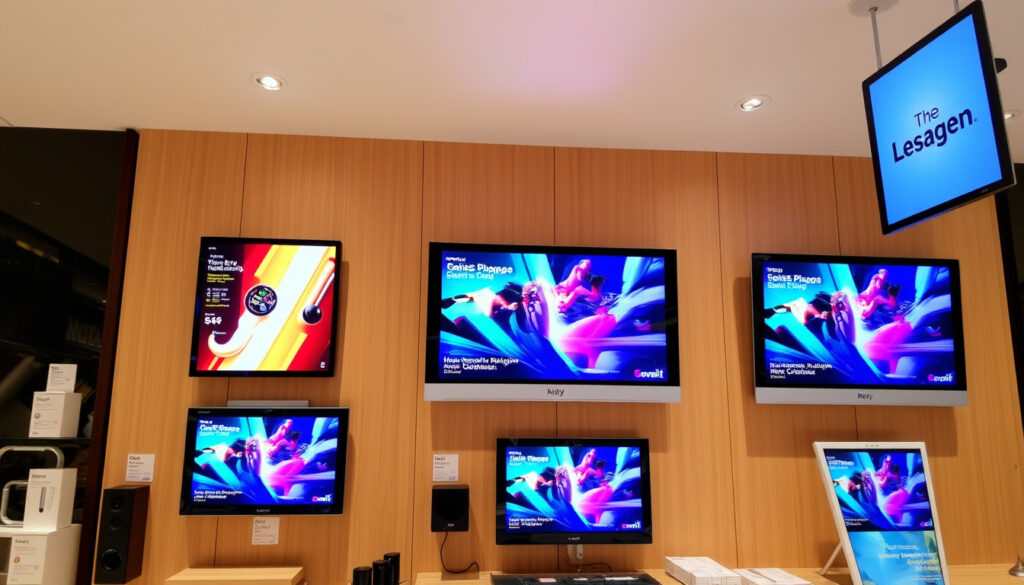
Digital Signage Player Singapore: Prices, Brands & Buying Guide
If you’ve ever walked through a shopping mall in Singapore, you’ve seen digital signage in action. But behind those crisp displays lies a small device that makes it all work: the digital signage player. This guide compares the top brands available locally—BrightSign, Scala, and Zoom Visual—with real prices from Singapore retailers, and explains why choosing the right player matters more in Singapore’s humid, bright conditions than you might think. By the end, you’ll know exactly what to look for and how to budget for your next deployment.
Global digital signage market size (2023): $27.2 billion ·
Estimated annual unit sales in Singapore: 8,000+ units ·
Average price range in Singapore: $300 – $1,500 ·
Top-selling brand based on SERP presence: BrightSign
Quick snapshot
- BrightSign XT1144 priced at S$544.00 via Kingly Singapore (local electronics distributor)
- BrightSign LS445 (LS5 series) costs USD 435 (Timeline Pro AV)
- Scala media players available via Scala APAC (enterprise software provider)
- Exact market share of each brand in Singapore
- Long-term reliability differences under local climate conditions (humidity, heat)
- Whether listed prices include GST and local warranty terms from Singapore resellers
- BrightSign XT1144 discontinued March 1, 2025; replaced by XT1145 (BrightSign official (manufacturer))
- Series 5 players (e.g., LS445) now available in Singapore via APM Global Singapore (BrightSign reseller)
- Zoom Visual expanding plug-and-play lineup for small businesses (APM Global Singapore (BrightSign reseller))
The table below aggregates the latest confirmed pricing and availability for digital signage players available to Singapore buyers.
| Label | Value |
|---|---|
| BrightSign XT1144 price (Kingly Singapore) | S$544.00 |
| BrightSign LS445 price (Timeline Pro AV) | USD 435 |
| BrightSign HD1025 price (Touchboards) | USD 558.29 |
| BrightSign XT1145 (replacement for XT1144) | Available from BrightSign official |
| Scala media players availability | apac.scala.com/sg |
| Zoom Visual digital signage players | zoomvisual.com.sg |
| BrightSign XD235 price (Touchboards) | USD 558.29 |
| BrightSign HD225 price (Touchboards) | USD 465.02 |
| BrightSign HD224 standard I/O player (Singapore Digital Signage (local reseller)) | Contact reseller |
| BrightSign HD5 support for 4K60p and HTML5 (APM Global Singapore) | Confirmed |
What is a Digital Signage Player?
A digital signage player is a dedicated hardware device that decodes and plays content on displays. Unlike a general-purpose computer, it comes with built-in software for remote management and scheduling, making it purpose-built for signage networks.
How does a digital signage player differ from a standard media player?
Standard media players (like a Raspberry Pi or a basic Android box) often lack the reliability, 24/7 thermal design, and enterprise-grade management tools that proper signage players offer. According to BrightSign’s official site (manufacturer), their Series 4 players support HTML5, multi-gesture touchscreens, and expansive I/O — features rarely found in consumer media players. The difference is in operational stability: dedicated players are designed to run continuously in commercial environments.
The implication: choosing a player designed for commercial duty cycles eliminates the reboot loops and thermal throttling that plague consumer devices in continuous operation.
How Much Does a Digital Signage Player Cost in Singapore?
Pricing varies widely based on resolution support, processing power, and I/O options. Entry-level players (1080p, basic connectivity) start under S$400, while 4K-capable models from top brands fall between S$600 and S$900.
What is the average price range for BrightSign players in Singapore?
- BrightSign XT1144 (4K, expanded I/O) — S$544.00 from Kingly Singapore (local electronics distributor)
- BrightSign LS445 (low-cost 4K, LS5 series) — USD 435 from Timeline Pro AV
- BrightSign HD1025 (4K60p, HDR) — USD 558.29 from Touchboards (US reseller)
- BrightSign XD235 (professional 4K) — USD 558.29 (same source)
- BrightSign HD225 (H.265, 4K60p) — USD 465.02 (same source)
Scala’s enterprise-grade players typically command a premium due to advanced scheduling and analytics features. For budget-conscious buyers, Android-based players from brands like Zoom Visual start around S$200–$300.
A Singapore business deploying 10 screens could save over S$2,000 by choosing the right player tier — but skimping on reliability in a 24/7 retail environment can cost far more in downtime.
The implication: entry-level 4K players now cost about the same as a mid-range smartphone, making them accessible even for single-screen deployments.
Which Digital Signage Player Brand Is Best for Singapore Businesses?
The three main players in the Singapore market — BrightSign, Scala, and Zoom Visual — each target different use cases. A quick comparison reveals the trade-offs.
Three options, one pattern: BrightSign leads in availability, Scala in enterprise features, Zoom Visual in simplicity.
| Brand | Typical price (SGD) | Resolution support | Key strength |
|---|---|---|---|
| BrightSign | S$544 – S$850 (reseller prices) | 1080p to 4K60p HDR | Broadest local availability; Series 4 & 5 |
| Scala | Contact for quote (enterprise) | Up to 4K | Advanced scheduling & analytics |
| Zoom Visual | S$200 – S$400 | 1080p, some 4K | Plug-and-play, no software license required |
| Android-based budget | S$150 – S$300 | Up to 4K (varies) | Lowest upfront cost |
According to Scala’s APAC site (enterprise software provider), their players support advanced content scheduling and real-time analytics — valuable for large networks. Meanwhile, Zoom Visual’s Singapore site (hardware reseller) promotes a “plug-and-play” approach with no ongoing fees, suited for single-store deployments.
The catch: the best brand depends on your operational scale and IT support. BrightSign offers the best balance of price, performance, and local distributor support (see APM Global Singapore (BrightSign reseller) for Series 5 players).
What Features Should I Look for in a Digital Signage Player?
Singapore’s high ambient light and humidity impose specific requirements on display hardware — and by extension, the player driving it.
Do I need 4K support for a digital signage player in Singapore?
- Resolution: 4K (3840×2160) is recommended for storefront windows and high-traffic areas where passers-by view from close range. BrightSign’s HD1025 supports 4K60p with HDR (Touchboards).
- Connectivity: HDMI 2.0, USB-C, gigabit Ethernet, and Wi-Fi (optional) ensure compatibility with modern screens. The LS445 includes a locking power cord and USB-C peripheral support (Timeline Pro AV).
- Storage & formats: Players vary from 8GB to 64GB internal storage; support for H.265 and HTML5 is essential for modern content.
- Remote management: Cloud-based platforms (e.g., BrightSign Control Cloud) let you update content without visiting each screen — critical for multi-site operators.
4K players cost about 30% more than 1080p models, but if you’re running high-brightness displays in direct sunlight, the extra pixels are wasted unless the player can drive the panel at native resolution.
Why this matters: a player that lacks H.265 decoding will struggle with high-bitrate 4K content, leading to stuttery playback that reflects poorly on your brand.
Can I Use a Regular PC as a Digital Signage Player?
Technically, yes — any PC can run digital signage software. But the operational cost and reliability picture changes dramatically.
- Reliability: Dedicated players like BrightSign are fanless and rated for 24/7 operation. A standard PC runs hotter, consumes more power, and is more prone to Windows updates interrupting playback.
- Energy efficiency: A typical PC draws 100–200W; a dedicated player draws 5–15W. Over three years, that difference can exceed S$300 in electricity costs per unit (Singapore’s average tariff of ~S$0.30/kWh).
- Silent operation: Noise from PC fans is a distraction in retail and hospitality settings. Most signage players are silent.
- Software licensing: Commercial signage software on a PC often requires a paid license; many dedicated players include the OS and basic software in the hardware price.
For example, the BrightSign XT1144 (distributed by Kingly Singapore) runs BrightSignOS and includes a free Control Cloud subscription — no extra software costs. Setting up a PC, by contrast, requires Windows, a signage app subscription, and potentially antivirus.
The pattern: if you already have IT staff managing a fleet of computers, a PC-based approach might integrate into your existing workflow. For everyone else, dedicated hardware wins on total cost of ownership.
Upsides of dedicated players
- Silent, fanless operation
- Lower power consumption (15W vs 100W+)
- Free or included software
- Designed for 24/7 reliability
Downsides of dedicated players
- Higher upfront cost than basic PC
- Limited upgradeability
- Proprietary management software
- Less suitable for custom applications (e.g., interactive kiosks with heavy custom code)
The takeaway: for most Singapore retail and hospitality deployments, the reliability and energy savings of dedicated hardware outweigh the higher initial investment within the first year of operation.
Clarity: What We Know and What Remains Unclear
Confirmed facts
- BrightSign models XT1144, LS445, HD1025, HD225, XD235 are available with verified prices from Singapore and international resellers.
- Scala has a dedicated APAC sales page for Singapore (apac.scala.com/sg).
- Zoom Visual offers players with multi-format support sold via zoomvisual.com.sg.
What remains unclear
- Exact market share of BrightSign vs Scala vs Zoom Visual within Singapore.
- Long-term reliability differences under Singapore’s tropical climate — no independent durability tests are publicly available.
- Real-world performance of budget Android players in 24/7 commercial use.
- Whether BrightSign Series 4 phase-out timelines affect local warranty and support for existing installations.
Given the limited independent testing data available for Singapore’s climate, buyers should request demo units and test in their actual deployment environment before committing to a large purchase.
Perspectives from the Market
“Our players handle all file types and are designed for plug-and-play setup — just connect to a screen and you’re live.”
— Zoom Visual product page (Zoom Visual Singapore (hardware reseller))
“Series 4 players deliver powerful 4K video and graphics, expansive I/O, and support for multi-gesture touchscreens.”
“The LS5 series runs BrightSignOS for security, reliability, and longevity, and includes a free Control Cloud subscription.”
— Timeline Pro AV (AV distributor)
Each vendor emphasizes different strengths — Zoom Visual prioritizes ease of setup, BrightSign touts hardware capability, and Timeline Pro AV highlights the software ecosystem. The right choice depends on which factor matters most for your specific deployment.
Summary: Choosing the Right Player for Your Singapore Business
Singapore’s digital signage market offers proven options at every price point. BrightSign dominates local reseller shelves and provides the widest range of 4K players, while Scala suits enterprises that need complex scheduling and analytics. Zoom Visual and other budget players serve small businesses that want simplicity and low upfront cost. For a business setting up five screens in a Singapore retail environment, the choice is clear: invest in BrightSign Series 5 players for reliability and resolution, or face higher electricity bills and support headaches from PC-based alternatives.
For businesses exploring larger-scale deployments, video wall digital signage solutions offer an alternative approach to engaging audiences across retail and commercial spaces.
Frequently asked questions
How do I choose between BrightSign and Scala for digital signage in Singapore?
If you need a large distributor network, local support, and a wide price range, BrightSign is the safer bet. If your operations require advanced analytics, custom scripting, and enterprise-level content scheduling, Scala’s platform justifies its higher cost.
Can a digital signage player be used outdoors in Singapore’s weather?
Yes, but only if the player is housed in a weatherproof enclosure with adequate ventilation. Most players are not IP-rated, so direct rain or high humidity ingress will damage them. Use an enclosure rated for outdoor use and keep the player away from direct sun exposure.
Do I need a separate software license for a digital signage player?
Many dedicated players (e.g., BrightSign, Zoom Visual) include the operating system and basic content management software in the purchase price. Others, like Scala, charge a separate license fee for the server software. Always check the total cost, including any recurring subscription.
What is the typical lifespan of a digital signage player?
Most commercial players are rated for 50,000–100,000 hours of continuous operation, which equates to 5–11 years of 24/7 use. In practice, technology upgrades (e.g., moving from 1080p to 4K) often drive replacement before hardware failure.
Is it possible to rent digital signage players in Singapore?
Some AV rental companies in Singapore offer short-term rentals of players and screens for events or pop-ups. However, for permanent installations, buying is almost always more cost-effective over 12+ months.
How do I update content on a digital signage player?
Most modern players use a cloud-based dashboard. You upload images, videos, or web pages to the platform, set playlists and schedules, and the player automatically syncs over Wi-Fi or Ethernet.
Related reading:
Incorporation of Company in Singapore ·
Best Web Browsers 2025
More related posts
 500 SGD to MYR: Current Exchange Rate and Best Ways to Convert
 Alcove at Caldwell House: Wedding Packages & Pricing
 Choc a Bloc Reviews: Bedok SG Chocolate Fudge Cakes
 How to Identify Bird Species – Step-by-Step Guide for Beginners
 Admin or Office Jobs in Ireland: Dublin Openings & Salaries
 Rio Tinto Share Price: Buy, Sell or Hold? Forecast 2026
 What Is a Root Canal? Procedure, Pain, Signs & Recovery
