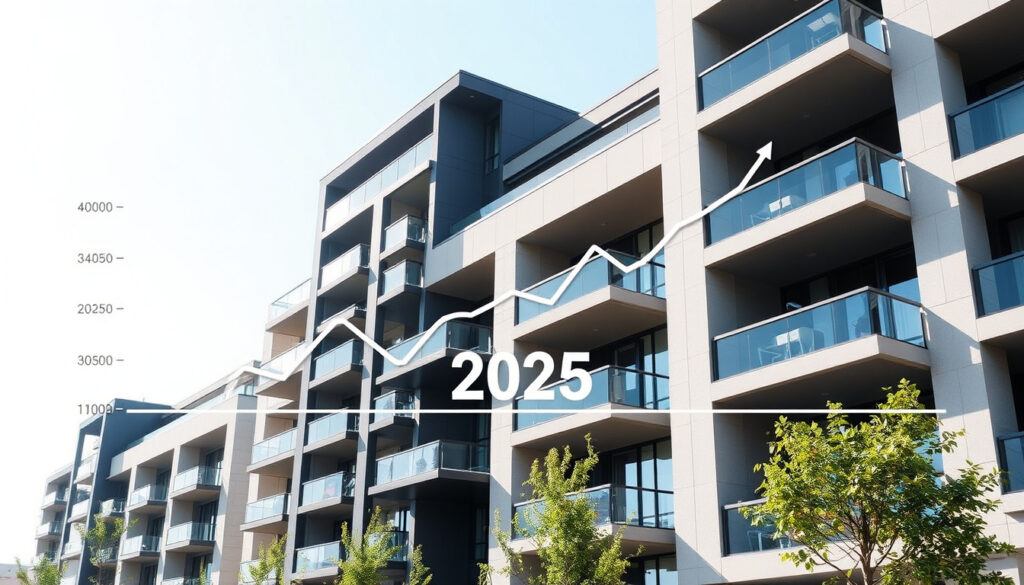
Sales of Balance Flat 2025 – Stable Trends and Buyer Insights
India’s residential property market in 2025 has demonstrated remarkable stability despite earlier forecasts of a potential downturn. Sales of under-construction properties, commonly referred to as balance flats, have shown moderated growth patterns that reflect both evolving buyer preferences and strategic responses from developers. The market’s performance through the year has been shaped by macroeconomic factors including interest rate adjustments, regulatory frameworks, and shifting demand across different price segments. Industry observers note that the sector has adapted to changing conditions without resorting to aggressive price reductions, instead employing more nuanced strategies to manage inventory and maintain sales momentum. This article examines the current state of balance flat sales, the factors influencing market dynamics, and what these trends mean for prospective buyers and investors navigating the residential property landscape in 2025.
The balance flat segment, which encompasses properties where construction is ongoing and buyers typically enter during early or mid-development phases, represents a significant portion of new project launches across India’s major urban centres. Understanding the trajectory of this market segment requires careful analysis of sales data, inventory levels, and the broader economic environment affecting buyer decisions and developer strategies.
Balance Flat Sales in 2025: Market Overview and Key Indicators
Critical Insights on Balance Flat Sales Performance
- India’s residential market recorded a 2% year-on-year sales increase in 2025, with stronger momentum in the second half showing 3% growth compared to the previous year
- The Quarter-to-Sale metric remained stable at 5.8 quarters across eight major markets, indicating balanced supply-demand conditions despite rising inventory levels
- Lower-priced segments under INR 10 million experienced notable slowdowns, while mid-to-premium ranges between INR 20–200 million continued strong performance
- Developers responded to market conditions by moderating new project launches rather than reducing prices, preserving healthy price growth throughout 2025
- The Reserve Bank of India’s cumulative 125 basis point repo rate reduction since February 2025 substantially improved housing affordability and financing conditions
- Bank and developer subvention schemes, along with selective stamp duty waivers, provided additional support to maintain sales momentum
Balance Flat Sales Snapshot: 2024–2025 Comparison
| Metric | 2024 Status | 2025 Trend | Outlook |
|---|---|---|---|
| Overall Sales Volume | Established baseline | 2% YoY increase | Moderated growth continuing |
| Under-Construction Inventory | Elevated levels | Rising but managed | Stable through controlled launches |
| Quarter-to-Sale Period | Similar trajectory | 5.8 quarters average | Consistent across tracked markets |
| Price Growth | Healthy expansion | Maintained positive trajectory | Resilient despite market pressures |
| Buyer Financing Costs | Elevated rates | Improved via rate cuts | Easing conditions expected |
| New Project Launches | High volume | Moderated pace | Strategic inventory control |
What Factors Are Driving Balance Flat Sales in 2025?
Monetary Policy and Interest Rate Environment
The Reserve Bank of India’s monetary policy stance has emerged as a significant catalyst for residential market activity. Following cumulative repo rate reductions of 125 basis points implemented since February 2025, home loan EMIs have become more manageable for prospective buyers considering balance flat purchases. This policy shift has particularly benefited buyers evaluating properties in the under-construction phase, where financing costs represent a substantial portion of total ownership expenses. The central bank’s decision to project inflation at 2.0% while upgrading GDP growth forecasts to 7.3% for fiscal year 2025-26 has reinforced confidence in the economic trajectory supporting housing demand.
Developer Strategies and Market Adaptation
Rather than pursuing aggressive pricing strategies that might have eroded asset values, developers have adopted a dual approach combining selective price increases with attractive financing packages. Bank and developer subvention schemes have become increasingly prevalent, allowing buyers to secure properties with favourable payment terms during the construction phase. This approach has helped maintain developer margins while keeping properties accessible to qualified buyers, demonstrating the industry’s capacity to adapt to evolving market conditions without compromising on pricing integrity.
Development activity has continued to outpace sales since 2022, with developers capitalising on the sustained demand environment. However, the pace of new launches moderated in 2025 as builders prioritised managing existing inventory rather than expanding their project pipelines, reflecting a more measured approach to market expansion.
Price Segment Differentiation
The residential market has exhibited pronounced segmentation across price tiers, with balance flat sales performing differently depending on the target segment. Properties priced below INR 10 million experienced notable slowdowns as affordability constraints tightened for entry-level buyers. Conversely, units in the INR 20–200 million range maintained robust growth trajectories, suggesting that demand among higher-income brackets and investors remained resilient. This segmentation highlights the importance of understanding specific market dynamics rather than treating the balance flat segment as a homogeneous category.
Timeline of Balance Flat Sales Trends and Market Evolution
Understanding the trajectory of balance flat sales requires examining how the market has evolved through distinct phases that have shaped current conditions.
- 2020–2022 Post-Pandemic Surge: The residential market experienced a significant rebound as pent-up demand combined with pandemic-driven priorities for homeownership, triggering renewed interest in under-construction properties at favourable pricing.
- 2023 Market Maturation: Regulatory enforcement under RERA frameworks strengthened buyer confidence in balance flat purchases, while developers invested heavily in project completions to meet rising delivery expectations.
- 2024 Stabilisation Phase: Sales growth moderated as the market adjusted to new economic realities, with developers beginning to moderate launch frequencies to prevent inventory accumulation beyond sustainable levels.
- 2025 Q1–Q2 Rate Cycle: The Reserve Bank of India initiated repo rate reductions, improving financing conditions and partially offsetting affordability pressures affecting lower-priced segments.
- 2025 Q3–Q4 Sustained Performance: The second half demonstrated stronger momentum with 3% year-on-year growth, validating the market’s underlying resilience despite earlier concerns about potential corrections.
The Quarter-to-Sale metric remaining stable at 5.8 quarters across eight major markets indicates balanced conditions where supply is being absorbed at a sustainable pace. This stability suggests that inventory management practices implemented by developers have been effective in preventing the oversupply scenarios that some analysts had anticipated.
What Is Established and What Remains Uncertain in Balance Flat Sales Projections
| Established Information | Remaining Uncertainties |
|---|---|
| Stable urban demand for residential properties in major metropolitan areas | Full impact of extended rate cut cycle on buyer sentiment and purchasing decisions |
| RERA protections providing regulatory framework for balance flat purchases | Regional variations in market performance across Tier 1 and Tier 2 cities |
| Developer financing incentives and subvention schemes maintaining affordability | Potential effects of broader economic conditions on buyer confidence |
| Inventory levels being managed through moderated launch activity | Timeline for any future policy adjustments affecting the housing sector |
| Price growth remaining healthy without aggressive corrections | Impact of evolving buyer preferences on specific project categories |
Market Analysis: Understanding Balance Flat Dynamics in Context
The balance flat segment occupies a distinctive position within India’s residential property market, offering buyers the opportunity to enter projects during construction phases at potentially favourable pricing while accepting completion risk in exchange. This trade-off has become increasingly structured under RERA frameworks, which mandate clearer timelines and accountability mechanisms that have materially improved the risk profile of under-construction purchases.
Government support measures have reinforced market stability through multiple channels. Beyond direct financing incentives, selective stamp duty discounts and waivers have provided transactional cost relief that benefits buyers entering balance flat agreements. These policy interventions have been particularly valuable for the mid-market segment where total transaction costs can significantly influence purchase decisions.
The long-term trajectory remains positive according to industry projections. India’s real estate market is anticipated to reach $1 trillion by 2030, driven by infrastructure development, urbanisation trends, and the nation’s expanding role in global value chains. Regional hubs are positioning themselves to capture growth from these macro trends, with infrastructure connectivity improvements enhancing the attractiveness of previously peripheral locations.
Expert Perspectives and Source Material
“Rather than implementing price reductions, developers adopted a dual strategy: they increased prices while simultaneously offering financing incentives to homebuyers and postponing project launches to control inventory pressure.”
— Knight Frank Research, India Real Estate Office and Residential Market Report H2 2025
The analysis draws upon comprehensive market research from Knight Frank, which tracks eight major Indian markets through the Quarter-to-Sale metric and other indicators. CREDAI, the Confederation of Real Estate Developers’ Associations of India, provides additional industry perspective on developer strategies and market positioning. State-level RERA authorities offer regulatory compliance data that informs understanding of project completion timelines and buyer protection mechanisms.
For readers following premium consumer product markets, the CurrentBody LED Mask 2025 Review examines pricing and product evolution in a different sector. Readers interested in consumer electronics pricing strategy may also find value in the analysis presented in Galaxy S5 to Buy – Prices in 2025, which looks at how pricing dynamics play out across market cycles.
What Lies Ahead for Balance Flat Buyers and the Residential Market
The residential market has demonstrated notable stability following a sustained post-pandemic upcycle, with government support for affordable housing and easing financial conditions expected to reinforce this trajectory. For prospective buyers considering balance flat purchases, the current environment presents a nuanced picture where improved financing conditions must be weighed against inventory levels and project-specific risk factors.
Key considerations for market participants include monitoring the trajectory of further repo rate adjustments, evaluating RERA-registered projects with established completion track records, and assessing the financial stability of developers when considering under-construction purchases. The combination of regulatory protections, financing support mechanisms, and controlled inventory levels suggests that the balance flat segment will continue offering viable opportunities for buyers who approach decisions with appropriate due diligence.
The market’s resilience through 2025, characterised by maintained price growth and effective inventory management, indicates that India’s residential sector has developed greater maturity in navigating cyclical pressures. While uncertainties remain regarding the pace of economic normalisation and potential policy shifts, the fundamental drivers supporting housing demand — including demographic trends, urbanisation, and economic growth prospects — continue to underpin a constructive medium-term outlook for the balance flat segment.
Frequently Asked Questions
What exactly is a balance flat in the Indian real estate context?
A balance flat refers to an under-construction residential unit where the buyer enters into an agreement during the development phase, typically making payments according to a construction-linked plan rather than paying the full amount upfront upon completion.
Are balance flats considered a good investment opportunity in 2025?
Balance flats can offer advantages including potential price appreciation during construction phases and attractive financing options, but buyers should carefully assess developer track records, RERA compliance, and project completion timelines before committing.
What are the primary risks associated with purchasing balance flats?
Key risks include project delays, developer financial difficulties, potential cost overruns, and changes in market conditions before possession. RERA registration and clear contractual terms help mitigate but do not eliminate these risks.
How have interest rate changes affected balance flat sales in 2025?
The RBI’s cumulative 125 basis point repo rate reduction since February 2025 has improved home loan affordability, making financing more accessible for balance flat purchases and supporting overall market demand.
What should buyers look for when evaluating a balance flat project?
Buyers should verify RERA registration, examine the developer’s previous project completions, assess construction quality indicators, review payment schedule terms, and understand completion guarantees and escalation clauses in agreements.
How does the Quarter-to-Sale metric affect balance flat buyers?
The Quarter-to-Sale metric indicates how quickly existing inventory is being absorbed. A stable reading of 5.8 quarters suggests balanced market conditions where supply and demand are in equilibrium, which generally supports healthy pricing and reasonable buyer choice.
What is the difference between ready-to-move and balance flats?
Ready-to-move properties offer immediate possession but typically command premium pricing, while balance flats require buyers to wait for construction completion but often provide better pricing and payment flexibility during the construction phase.
More related posts
 Man City vs Wydad AC (2-0): Club World Cup match report
 Cast of Workin’ Moms: Full List of Actors and Characters
 Cheap Chicken Rice Singapore: Where to Find Budget Meals
 Narita Airport to Tokyo: Compare Trains, Buses, Taxis & Costs
 HomeTeamNS Bukit Batok Chalet: West Villa Guide 2025
 bu guru al a xxx
 Coconut Club River Valley – Location, Menu, Michelin Facts
 300 SGD to INR: Convert Singapore Dollars to Rupees
