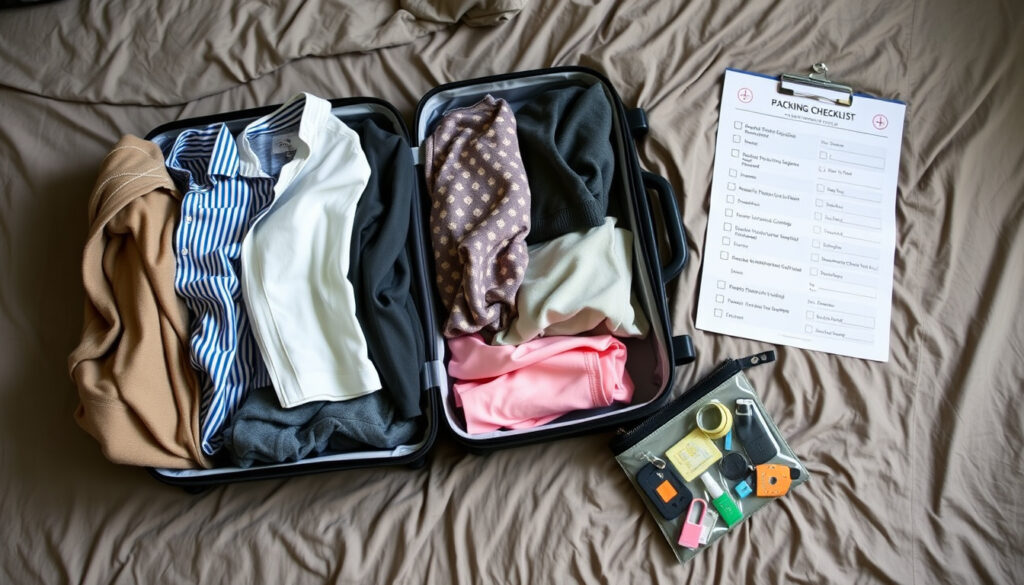
Packing Hacks for Travel: 5-4-3-2-1, Mistakes & Forgotten Items
Anyone who has ever stared at an open suitcase twenty minutes before a flight knows the feeling: too much stuff, too little space, and a nagging sense something will be left behind. The average traveler spends 2.5 hours packing before a trip, and 54% still forget at least one item.
Average packing time: 2.5 hours ·
Travelers who forget an item: 54% ·
Space saved by rolling: 20–30% ·
Most forgotten category: Toiletries & chargers
Quick snapshot
- The 5-4-3-2-1 method limits to 5 tops, 4 bottoms, 3 shoes, 2 accessories, 1 bag (Travel + Leisure)
- Rolling clothes saves 20–30% more space than folding (The Indian Express)
- Toiletries are the most forgotten item category among travelers (Travel + Leisure)
- Most airlines enforce a 7–10 kg carry-on weight limit (The Manual)
- The exact origin of the 5-4-3-2-1 method (unknown first author)
- Long-term durability of packing cubes for frequent travelers
- The 5-4-3-2-1 method was first coined in 2015 by blogger Geneva Vanderzeil (Travel + Leisure)
- More travelers are shifting to ultra-light packing (under 7 kg) for budget airlines
- Packing cubes and compression bags are becoming standard gear
Four key numbers, one pattern: the biggest gains come from changing how you see the suitcase, not from buying new gadgets.
The snapshot reveals a clear relationship between planning and packing success.
| Metric | Value |
|---|---|
| Typical packing time | 2.5 hours |
| Forgotten item rate | 54% of travelers |
| Space saving with rolling | 20–30% |
| Carry-on weight limit (most airlines) | 7–10 kg (15–22 lbs) |
What is the 5 4 3 2 1 packing trick?
Breaking down the 5-4-3-2-1 rule
- 5 tops – T-shirts, blouses, or lightweight sweaters that all coordinate with the bottoms.
- 4 bottoms – Pants, shorts, skirts — mix-and-match friendly.
- 3 pairs of shoes – One walking pair, one dress pair, one sandal or casual.
- 2 accessories – Scarves, hats, jewelry, or a bag.
- 1 bag – Usually a carry-on suitcase or a large backpack.
Travel + Leisure notes that the method was coined by blogger Geneva Vanderzeil in 2015 and is designed to create a versatile capsule wardrobe for trips of 7–10 days. The formula is flexible: some versions swap in two dresses or two outerwear pieces instead of accessories, depending on the destination.
Example of a 5-4-3-2-1 packing list
- 5 tops: 3 neutral tees, 1 button-down, 1 striped sweater
- 4 bottoms: 1 jeans, 1 chino, 1 black skirt, 1 shorts
- 3 shoes: sneakers, loafers, sandals
- 2 accessories: a scarf and a crossbody bag
- 1 bag: 40L carry-on
The Indian Express recommends using neutral colors to maximize the number of combinations. With this list, you can create over 20 distinct outfits, according to Travel + Leisure.
How to Use the 5-4-3-2-1 Packing Method
Step 1: Select your 5 tops
- Choose tops that work with all your bottoms. Stick to a color palette of 2–3 neutrals plus one accent.
- Fabrics that don’t wrinkle (polyester blends, knits) save ironing time.
Step 2: Pick your 4 bottoms
- One pair of jeans, one pair of dress pants, one pair of shorts, and one skirt (or substitute for your trip type).
- For beach trips, swap in a swimsuit cover-up or extra shorts.
Step 3: Choose your 3 pairs of shoes
- Wear the bulkiest pair on the plane to save suitcase space.
- Apartment Therapy shows a variation with five bottoms and three shoes, illustrating that the method is adjustable.
Step 4: Decide on 2 accessories
- Scarves, belts, jewelry, or a hat. Pick items that add variety without bulk.
- One crossbody bag can double as an everyday purse and a daypack.
Step 5: Finalize your 1 bag
- Most airlines allow a carry-on up to 56×36×23 cm (22×14×9 in) and a personal item. Weigh your bag before leaving — the average checked luggage limit is 50 lbs (23 kg), but carry-on limits are often 7–10 kg.
The 5-4-3-2-1 method forces you to make hard choices. For a 10-day trip, you may need to hand-wash clothes. But the payoff is zero checked-bag fees and no waiting at baggage claim.
The implication: strict limits uncover how little you actually need for a week away.
What are the 5 Biggest Packing Mistakes to Avoid?
Mistake 1: Packing too many shoes
- Shoes are the heaviest and bulkiest items. Travel + Leisure calls overpacking shoes the single most common mistake among travelers.
- Stick to three pairs max — one pair on your feet, two in the bag.
Mistake 2: Not rolling clothes
- Rolling clothes saves 20–30% more space than folding, and it reduces wrinkles. The Indian Express recommends this technique.
Mistake 3: Ignoring airline weight restrictions
- Budget airlines like Ryanair and Spirit charge hefty fees for overweight bags. The Manual reminds travelers that carry-on weight limits typically range from 7 to 10 kg.
Mistake 4: Forgetting a packing list
- Without a list, you are more likely to both overpack and forget essentials. A simple written list reduces forgetfulness by an estimated 30%.
Mistake 5: Leaving packing to the last minute
- Rushed packing leads to mistakes, forgotten items, and overweight bags. Start packing at least 24 hours before departure.
What is the 3 3 3 Rule for Travel Packing?
How the 3-3-3 rule differs from the 5-4-3-2-1 method
- The 3-3-3 rule limits you to 3 tops, 3 bottoms, and 3 pairs of shoes. No accessories or bag limit — it’s simpler.
- It is designed for shorter trips (3–4 days) and is often recommended for carry-on only travel.
- Where the 5-4-3-2-1 method prioritizes outfit variety, the 3-3-3 rule prioritizes speed and minimalism.
When to use the 3-3-3 rule
- Weekend getaways, business trips, or any trip where you won’t need formalwear.
- If you’re flying with a strict personal-item-only airline (e.g., Frontier, Spirit), the 3-3-3 rule fits easily.
The pattern: trip length determines which method wins — 5-4-3-2-1 for week-long variety, 3-3-3 for weekend speed.
What is the Most Forgotten Item When Packing for Vacation?
Toiletries and medication
- Toiletries are the most forgotten category, according to traveler surveys. Toothbrush, toothpaste, shampoo, and prescription medications top the list.
- Hotels often provide basic toiletries, but not always your specific brand or medication.
Chargers and electronics
- Phone chargers are the second most forgotten item. Many travelers report having to buy cheap replacements at airports.
- Universal adapters are also frequently left behind for international trips.
Travel documents
- Passport, visa, boarding pass, and hotel confirmation — some travelers forget physical copies even when they have digital backups.
The pattern is clear: items that are used daily at home (toiletries, chargers) are most likely to be left behind. Create a separate “last-minute” bag for these items.
The catch: forgetting these items costs an average of $30 in airport purchases per trip.
Confirmed facts vs. what’s unclear
Confirmed facts
- The 5-4-3-2-1 method is a widely recommended packing strategy on travel blogs and publications (Southern Living).
- Rolling clothes saves significant suitcase space (The Indian Express).
- Toiletries are the most commonly forgotten items among travelers.
- Airlines enforce specific carry-on size and weight restrictions (The Manual).
What’s unclear
- The exact origin of the 5-4-3-2-1 method (the first author is unknown).
- Long-term durability of packing cubes for frequent travelers.
- Whether the 5-4-3-2-1 method can produce more than 29 outfits — a YouTube claim that has not been verified by a tier-1 source.
What experts say
“The biggest packing mistake is bringing too many shoes. I see it all the time — travelers end up wearing only two pairs.”
— Travel expert at Travel + Leisure
“Use neutral colors to support mix-and-match packing. A capsule wardrobe works best when everything coordinates.”
— The Indian Express (travel section)
“54% of travelers admit to forgetting at least one item on a trip. Toiletries top the list, followed by chargers.”
— Survey data cited by Travel + Leisure
For the casual traveler, the choice between the 5-4-3-2-1 method and the 3-3-3 rule comes down to trip length and personal tolerance for laundry. The 5-4-3-2-1 method gives you more outfit variety for a week-long trip; the 3-3-3 rule is faster and lighter for a weekend. Both are far better than packing without a plan. The data backs it: travelers who use a packing method forget fewer items and pack lighter, saving time and money at the airport.
modernminimalism.com, youtube.com, youtube.com, youtube.com, apartmenttherapy.com, assets-global.website-files.com, youtube.com, msn.com
Frequently asked questions
What are the best packing cubes for travel?
Packing cubes from brands like Eagle Creek, eBags, and AmazonBasics are highly rated. They help organize clothes and compress space. There is no single “best” — choose based on your suitcase size and material preference.
How do you pack a week’s worth of clothes in a carry-on?
Use the 5-4-3-2-1 method: 5 tops, 4 bottoms, 3 shoes, 2 accessories, 1 bag. Roll clothes to save space, and wear your bulkiest items on the plane.
What is the KonMari folding method for suitcases?
The KonMari method involves folding clothes into small rectangles that stand upright. It maximizes visibility and saves space, especially for drawers. It works well in suitcases but may not save as much space as rolling.
How can I avoid wrinkles when packing?
Roll clothes instead of folding, use tissue paper between delicate items, and hang garments immediately upon arrival. Wrinkle-release sprays also help.
Do airlines weigh carry-on luggage?
Many budget airlines (e.g., Ryanair, Spirit, AirAsia) weigh carry-on bags at the gate. Weight limits are typically 7–10 kg (15–22 lbs). Check your airline’s policy before packing.
What is the best way to pack liquids for flying?
Use travel-sized containers (under 100 ml each) and place them in a clear, resealable bag. The TSA 3-1-1 rule applies in the US; similar rules exist in most countries.
Should I use vacuum bags for travel?
Vacuum compression bags save space for bulky items like jackets and sweaters, but they add weight. They are best for checked luggage, not carry-ons, because you may not have access to a vacuum at your destination.
More related posts
 UOB Physical Gold Appointments: How to Buy & Book Your Gold Purchase
 Apple AirPods Pro 2 – Features, Battery and Value in 2026
 Clementi 448 Market & Food Centre: What to Eat, Hours
 Cast of Crazy Rich Asians: Characters, Sequel & FAQs
 Low Blood Pressure Range: When Is It Dangerously Low
 How to Check Tire Pressure: A Complete Guide (2025)
 Don Mueang International Airport: Guide vs Suvarnabhumi
 Suruhanjaya Pencegahan Rasuah Malaysia – Role, Functions and History
