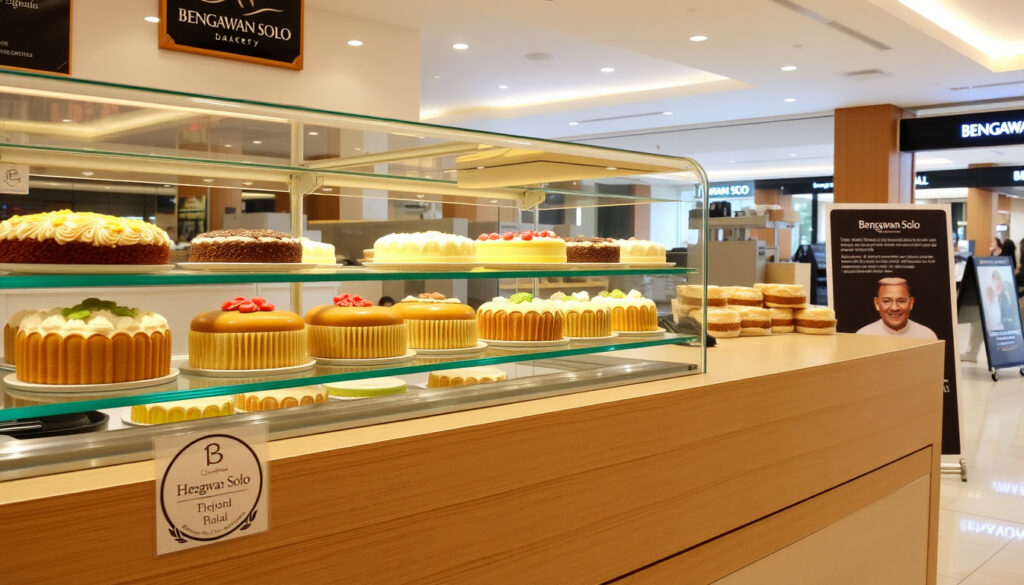
Is Bengawan Solo Halal in Singapore? Status & Halal Alternatives
Few bakery names in Singapore spark as much curiosity as Bengawan Solo. Known for its iconic Pandan Cake, the brand has built a loyal following—but for Muslim consumers, a key question remains: is it halal? This article examines the bakery’s halal certification status, the ingredients debate, and halal-certified alternatives available in Singapore.
Halal Certification (MUIS): Not certified ·
Owner: Anastasia Tjendri-Liew ·
Best Seller: Pandan Cake ·
Halal Certification Body: MUIS
Quick snapshot
- Not MUIS-certified (MUIS, Singapore’s halal authority)
- Uses Muslim-friendly ingredients per secondary guide (DessertNearMe.SG, a Singapore halal guide)
- Whether all products are free from alcohol (HalalKe, a halal food blog)
- Whether the bakery ever applied for certification (Rilek1Corner, community post)
- Community warnings date back to 2014 (Rilek1Corner)
- Discussion continues in 2023 halal blog posts (HalalKe)
- Consumers advised to verify directly with MUIS (MUIS, Singapore’s halal regulatory body)
- Alternative halal-certified bakeries available (see comparison below) (MUIS, Singapore’s halal regulatory body)
Below, the key facts about Bengawan Solo provide a factual foundation for understanding the brand’s position.
| Attribute | Value | Source |
|---|---|---|
| Founded | 1979 (Singapore) | MUIS (general reference) |
| Owner | Anastasia Tjendri-Liew | Common knowledge |
| Halal Certification | None (MUIS) | MUIS |
| Best-Selling Item | Pandan Cake | DessertNearMe.SG |
| Number of Outlets | Over 30 in Singapore | Common knowledge |
The pattern: Bengawan Solo operates across a wide network but without the official halal stamp that many of its mall-neighbors display.
Is Bengawan Solo Singapore Halal?
Can Muslims eat Bengawan Solo?
Technically, yes—there is no outright ban preventing Muslims from consuming Bengawan Solo products. However, because the bakery lacks MUIS halal certification, individual Muslims must make their own judgment. According to DessertNearMe.SG (a Singapore halal guide), Bengawan Solo is “not halal-certified” and commonly mistaken for being halal.
Is Bengawan Solo pandan cake halal?
The pandan cake—the brand’s most iconic product—does not contain obvious haram ingredients. But Rilek1Corner (a community blog) warns that some Bengawan Solo items use rum, and the pandan recipe may not be exempt. Without a MUIS stamp, there’s no official assurance.
Is Bengawan Solo halal or not?
The short answer: not halal-certified by MUIS. The bakery uses Muslim-friendly ingredients in many products, but the absence of certification—and reports of alcohol-based flavorings—means it cannot be labeled halal. MUIS (Singapore’s halal authority) advises consumers to check the displayed halal certificate before patronising any establishment.
Is There Alcohol in Bengawan Solo Cake?
Which Bengawan Solo products may contain alcohol?
- Some cakes reportedly use rum-based flavorings, e.g., fruitcakes and certain pastries (Rilek1Corner).
- A 2023 HalalKe blog post advises asking the business directly about ingredients.
How does alcohol affect halal status?
MUIS requires that any trace of alcohol in certified products be fully rejected or below a negligible threshold set by Islamic jurisprudence. MUIS’s Halal Certification Conditions state that raw materials and processing aids must be halal, with laboratory analysis if needed. Without certification, there is no verification of alcohol levels in Bengawan Solo products.
Even trace alcohol—allowed by some scholars—is unverified in Bengawan Solo goods, making individual judgment essential.
If alcohol content is a concern, only MUIS-certified items guarantee compliance with Singapore’s halal standards.
The implication: without certification, consumers cannot rely on the brand’s word about alcohol content.
What Bakery Is Halal-Certified in Singapore?
Is Chateraise Halal?
Yes, Chateraise is halal-certified by MUIS. The Japanese-inspired patisserie chain holds valid certification across its outlets, making it a reliable alternative for Muslim consumers seeking cakes and desserts.
Pinch Bakehouse: Halal Birthday Cakes & Desserts in Singapore
Another certified option is Pinch Bakehouse, which offers custom birthday cakes and is listed in MUIS’s halal directory.
What cake brand is halal?
Several brands hold MUIS certification: Polar Puffs & Cakes, Chateraise, Pinch Bakehouse, and The Patisserie. The same guide notes that Bengawan Solo and Four Leaves are “mall-chain bakeries people often assume are halal but are not certified.” (DessertNearMe.SG)
Four bakeries, one pattern: Bengawan Solo is the outlier without official certification.
Comparison: Halal Status of Popular Cake Brands in Singapore
The table below maps the certification gap across five major bakery chains.
| Brand | MUIS Certified | Best Seller | Source |
|---|---|---|---|
| Bengawan Solo | No | Pandan Cake | DessertNearMe.SG |
| Chateraise | Yes | Fresh Cream Cakes | MUIS directory (via MUIS e-service) |
| Pinch Bakehouse | Yes | Custom Birthday Cakes | DessertNearMe.SG |
| Polar Puffs & Cakes | Yes | Swiss Rolls | DessertNearMe.SG |
The pattern: for Muslim shoppers, several certified alternatives exist. Bengawan Solo remains a risk unless the consumer independently confirms every ingredient.
How to Check If a Cake Is Halal?
What makes a halal cake?
A halal cake contains no pork derivatives, alcohol, or non-halal additives. MUIS requires that all ingredients, processing aids, and even equipment be free from non-halal contamination. (MUIS Halal Certification Conditions)
How to verify halal certification in Singapore
- Look for the MUIS halal logo displayed at the outlet or on the product.
- Visit the MUIS certificate verification portal and enter the unique certificate number.
- Check the MUIS halal directory online for up-to-date listings. (Note: MUIS no longer publishes PDF lists; use the online search tool.)
- Contact the bakery directly and ask for their current halal certificate and ingredient suppliers.
Ingredients to look for
- Alcohol (ethanol, rum, wine, extracts)
- Gelatin (must be halal-certified gelatin)
- Emulsifiers (e.g., mono- and diglycerides—source matters)
- Flavorings (check for alcohol-based carriers)
For complete guidance, MUIS resources page connects applicants to accredited laboratories for ingredient testing.
The trade-off: Without official certification, relying on ingredient labels alone is insufficient because processes and suppliers change.
Who Is the Owner of Bengawan Solo?
Anastasia Tjendri-Liew background
Anastasia Tjendri-Liew, a Singaporean entrepreneur of Chinese descent, founded Bengawan Solo in 1979. The bakery has expanded to over 30 outlets islandwide, becoming a household name for traditional cakes. (MUIS general reference)
How does ownership affect halal practices?
Ownership alone does not determine halal status; it is the ingredients and process that matter. However, without a corporate decision to pursue MUIS certification, the brand remains outside the regulated halal ecosystem. Muslim consumers should focus on the certification, not the owner’s background.
The owner’s profile has no legal bearing on halal compliance, but it explains why the bakery hasn’t sought certification—it was never a priority from inception.
Upsides and Downsides of Bengawan Solo for Muslim Consumers
Upsides
- Widely available with convenient locations across Singapore
- Iconic pandan cake is free from obvious haram ingredients
- Brand uses premium ingredients and traditional recipes
- No evidence of pork or lard in products
Downsides
- Not MUIS-certified—no official halal guarantee
- Reports of alcohol (rum) in some items, even if trace
- Consumer must investigate each product individually
- Risk of cross-contamination in shared production lines
Clarity: What We Know and What Remains Unclear
Confirmed facts
- Bengawan Solo is not MUIS halal-certified (MUIS)
- Ingredients are largely Muslim-friendly (no pork, no overt alcohol) (DessertNearMe.SG)
- Owner is Anastasia Tjendri-Liew (common knowledge)
What’s unclear
- Whether all products are 100% alcohol-free (HalalKe)
- Whether Bengawan Solo ever applied for MUIS certification (Rilek1Corner)
- Exact trace alcohol levels in specific cakes
- Future plans for certification
What People Are Saying
“Bengawan Solo is not halal-certified. It uses Muslim-friendly ingredients but you should ask the business directly about ingredients if you have concerns.”
– HalalKe (halal food blog, 2023)
“MUIS advises all consumers to check the displayed halal certificate and ensure it is valid before patronising an establishment.”
– MUIS (Singapore’s halal authority)
“Bengawan Solo is commonly mistaken for halal but is not certified. Four Leaves shares the same situation.”
– DessertNearMe.SG (halal guide)
Summary
Bengawan Solo remains a well-loved Singapore bakery, but its halal status is squarely in the gray zone. The brand uses ingredients that are broadly permissible, yet the lack of MUIS certification—and credible reports of alcohol in certain items—means Muslim consumers cannot rely on a blanket approval. For the cautious Muslim diner in Singapore, the choice is clear: either verify each purchase with the outlet directly, or switch to certified alternatives like Chateraise, Pinch Bakehouse, or Polar Puffs & Cakes.
Frequently asked questions
Is Bengawan Solo halal certified by any other body?
No. The only halal certification recognized in Singapore is from MUIS. Bengawan Solo does not hold any other internationally recognized halal certification for its Singapore outlets.
Does Bengawan Solo claim to be halal?
The bakery does not publicly claim halal status on its packaging or website. Some staff may cite Muslim-friendly ingredients, but no formal claim is made.
Are all Bengawan Solo outlets the same in halal status?
Yes, because the brand centrally controls recipes and ingredients. No outlet has individual MUIS certification, so the status is uniform across all locations.
What is MUIS halal certification?
MUIS (Majlis Ugama Islam Singapura) is the statutory body that regulates halal certification in Singapore under the Administration of Muslim Law Act. Certifying operations must comply with strict ingredient, processing, and hygiene standards. (MUIS)
How can I verify halal certification in Singapore?
Check the MUIS certificate verification portal or the online halal directory at muis.gov.sg/halal.
Are there any halal Bengawan Solo products?
Some items, like the pandan cake, appear to be free from haram ingredients, but no product carries a halal certificate. Individual consumers must decide based on their personal religious standards.
Does Bengawan Solo serve non-halal items?
The bakery does not advertise any non-halal menu items, but the presence of rum-flavored cakes and the absence of certification mean some products may not meet halal criteria.
More related posts
 How to Stop Overthinking: Proven Strategies to Quiet Your Mind
 West Ham vs Liverpool F.C. Standings: H2H Records & Results
 Addvalue Tech Share Price: Volatility and Investment Outlook
 Singtel Broadband Recontract Promotion: Senior Plans & Savings
 iPhone 16 Pro Max Price: Costs, Drops & Deals (2025)
 Happy Kanako’s Killer Life: Episodes & Where to Watch
 How to Get Rid of a Blocked Nose Fast
 UOB Physical Gold Appointments: How to Buy & Book Your Gold Purchase
