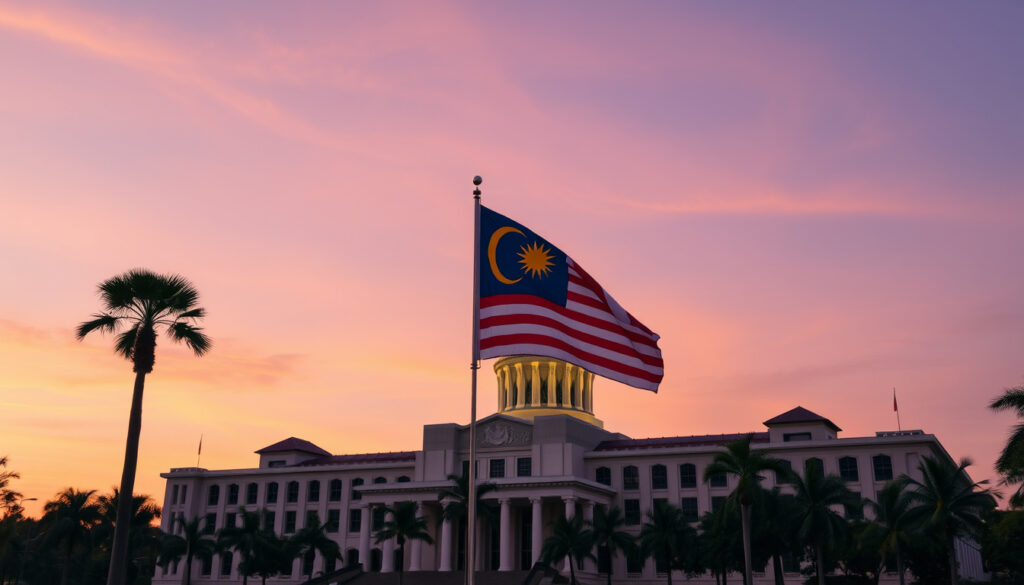
Tun Abdullah Ahmad Badawi: Malaysia’s PM 2003-2009 Obituary
When Tun Abdullah Ahmad Badawi took the helm as Malaysia’s fifth Prime Minister in late 2003, he inherited a nation weary from two decades of centralized control. Six years later, he would step aside—having opened space for political expression, but leaving critics to wonder whether reform had moved fast enough. Badawi died on 14 April 2025 at age 85, ending a chapter in Malaysian politics defined by moderation, human-development promises, and a quiet personal life marked by devotion to family and faith.
Prime Minister Term: 2003–2009 · Age at Death: 85 · UMNO President: 2004–2009 · Nickname: Father of Human Development · Political Party: UMNO
Quick snapshot
- PM of Malaysia 2003–2009 (Wikipedia)
- Born 26 November 1939 in Penang (Wikipedia)
- Died 14 April 2025 at National Heart Institute (Los Angeles Times)
- Exact hospital admission date in April 2025
- Full details of dementia progression post-2022
- Specifics on post-2009 low-profile activities
- Burial at Heroes’ Mausoleum 15 April 2025
- State funeral at National Mosque same day
- Resignation to Najib Razak April 2009 after 2008 election losses
- Legacy debate on reform vs indecision
- Historical assessment as transitional PM
- Family continuing public presence through Khairy Jamaluddin
The table below consolidates key biographical data for Tun Abdullah Ahmad Badawi.
| Label | Value |
|---|---|
| Full Name | Tun Abdullah bin Haji Ahmad Badawi |
| Born | 26 November 1939 |
| Died | 14 April 2025 (age 85) |
| Prime Minister | 2003–2009 |
| Party | UMNO |
What is the background of Tun Abdullah Ahmad Badawi?
Abdullah Ahmad Badawi descended from a lineage of religious scholars in Penang. His grandfather, Sheikh Abdullah Fahim, was a founding member of Hizbul Muslimin (later PAS) and the first mufti of Penang, establishing a family tradition of Islamic scholarship and nationalist activism that would shape his grandson’s political character. His father, Ahmad Badawi, continued this legacy as a prominent religious figure, UMNO member, and Islamic scholar in Penang.
Badawi’s religious pedigree gave him credibility with Malaysia’s Muslim majority while his UMNO affiliation connected him to the ruling political machinery that had governed Malaysia since independence.
Early life
Born on 26 November 1939 in Kampung Perlis, Bayan Lepas, Penang, Badawi attended Permatang Bertam Primary School, Bukit Mertajam High School, and Methodist Boys’ School in Penang before pursuing higher education.
Education
He graduated with a Bachelor of Arts (honors) in Islamic studies from the University of Malaya in 1964, a degree that would inform his approach to governance and his reputation as a moderate Muslim leader comfortable bridging traditional Islamic values with modern political engagement.
Who are the family of Abdullah Badawi?
Badawi’s personal life reflected his values of devotion and family commitment. He married Endon Mahmood in 1965, and together they built a family that would later include prominent public figures. Their son, Kamaluddin Abdullah, and daughter, Nori Abdullah, would both establish careers in the public sphere, with Nori marrying Khairy Jamaluddin, who would later serve as Malaysia’s Minister of Youth and Sports.
Khairy Jamaluddin’s disclosure of Badawi’s health struggles in 2022 gave the public rare insight into the former leader’s final years, marking a contrast with the guarded privacy typical of Malaysian political families.
First wife Endon Mahmood
Endon Mahmood became Badawi’s partner during his early political career, providing support through his rise within UMNO ranks and his tenure as Foreign Minister from 1991 to 1999. She died of breast cancer on 20 October 2005, while Badawi was serving as Prime Minister—a loss he publicly bore while continuing his governmental duties.
Second wife Jeanne Abdullah
After Endon’s death, Badawi married Jeanne Abdullah on 9 June 2007. Jeanne brought daughters Nadiah Kimie and Nadene Kimie from her previous marriage, expanding the family. Their marriage was notably private, with Jeanne maintaining a lower public profile than many political spouses.
What happened to Abdullah Ahmad Badawi?
Abdullah Ahmad Badawi died on 14 April 2025 at 7:10 p.m. at the National Heart Institute in Kuala Lumpur, succumbing to complications from heart disease after experiencing breathing difficulties. He was 85 years old. His death ended a months-long health battle that had largely removed him from public view since at least 2022, when his son-in-law Khairy Jamaluddin publicly revealed that Badawi had been diagnosed with dementia and could no longer recognize family members or communicate effectively.
Health battle
In 2022, Khairy Jamaluddin disclosed that Badawi had been battling dementia for some time, describing a situation where the former Prime Minister could not recognize family members or communicate effectively. This revelation came as a shock to many Malaysians who had known Badawi as a sharp, articulate political figure during his active years. In 2024, Badawi was hospitalized for spontaneous pneumothorax, a collapsed lung—a condition that required significant medical intervention and signaled ongoing health challenges.
Death and burial
Badawi passed away on the evening of 14 April 2025, with the National Heart Institute confirming complications from heart disease as the cause. His body lay in state at the National Mosque on 15 April from 10 a.m. to 1 p.m., allowing the public to pay respects. He was buried at the Heroes’ Mausoleum (Makam Pahlawan) at 2:30 p.m. that same day, receiving the state honors befitting a former Prime Minister.
What was Tun Abdullah Ahmad Badawi’s role as Prime Minister?
Abdullah Ahmad Badawi served as Malaysia’s fifth Prime Minister from October 2003 until April 2009, succeeding Mahathir Mohamad after the latter’s 22-year tenure. His appointment marked a deliberate choice for a more moderate, less combative style of leadership. As Prime Minister, Badawi prioritized what he called “human capital development”—an agenda focused on education, skills training, and economic opportunity for Malaysia’s growing middle class.
Badawi opened Malaysia’s political space and extended civil liberties after Mahathir’s restrictive rule—yet critics argued he lacked the decisiveness to push reforms through and failed to act forcefully on corruption despite establishing MACC.
Premiership 2003–2009
Taking office in October 2003, Badawi positioned himself as a leader who would restore civic freedoms while maintaining Barisan Nasional’s governing majority. His tenure saw notable improvements in press freedom and political expression compared to the Mahathir era. However, his government faced criticism for perceived indecision and weak implementation of anti-corruption pledges despite the establishment of the Malaysian Anti-Corruption Commission (MACC).
Anti-corruption efforts
Badawi’s signature anti-corruption initiative was the establishment of MACC, which replaced the earlier Anti-Corruption Agency. He positioned the commission as an independent body capable of investigating corruption at all levels of government. However, critics argued that investigations remained selective and that senior figures were rarely held accountable.
Barisan Nasional leadership
As UMNO President from 2004 to 2008, Badawi led the party to a strong electoral victory in March 2004. However, the 2008 elections saw Barisan Nasional lose its two-thirds parliamentary majority for the first time since 1969—a result widely interpreted as a rejection of Badawi’s leadership. He resigned as Prime Minister in April 2009, handing power to his deputy, Najib Razak.
Political legacy and historical context
Badawi’s political legacy sits in an uncomfortable middle ground—he genuinely expanded political freedoms in Malaysia, yet questions persist about whether he used that expanded space effectively or decisively enough to address the country’s structural challenges.
For Malaysian reformers, Badawi represents both what was possible and what remained undone—his government showed that opening political space need not destabilize governance, but his failure to push harder on corruption left problems that later governments would exploit. For those interested in learning more about George Foreman’s passing, you can find additional details at $storycircuit.us.
The comparison with Mahathir is unavoidable: where Mahathir ruled through centralized authority and was willing to use extraordinary powers to maintain control, Badawi tried a different approach—one more tolerant of criticism and dissent but arguably less effective at translating political capital into policy outcomes. His handover to Najib Razak in 2009 would prove consequential; Najib’s later corruption scandals (culminating in the 1MDB scandal) retrospectively cast Badawi’s six years in a somewhat more favorable light.
For Malaysia’s political future, Badawi’s example offers lessons about the risks of reform without implementation. His tenure showed that voters would reward opening political space but also punish perceived weakness—and that the absence of decisive action on corruption could allow problems to fester until they became crises.
Timeline
The following timeline tracks Badawi’s life and major career milestones.
| Date | Event |
|---|---|
| 26 November 1939 | Born in Penang, Malaysia |
| 1964 | Graduated from University of Malaya with BA in Islamic Studies |
| 1965 | Married Endon Mahmood |
| 1991 | Appointed Minister of Foreign Affairs |
| 1991–1996 | UMNO Secretary-General |
| 1999 | Became Deputy Prime Minister and Minister of Home Affairs |
| October 2003 | Succeeded Mahathir Mohamad as Prime Minister |
| 20 October 2005 | First wife Endon Mahmood died of breast cancer |
| 9 June 2007 | Married Jeanne Abdullah |
| 2008 | Barisan Nasional lost two-thirds parliamentary majority |
| April 2009 | Resigned as Prime Minister; succeeded by Najib Razak |
| 11 September 2022 | Khairy Jamaluddin publicly revealed Badawi’s dementia |
| 2024 | Hospitalized for spontaneous pneumothorax |
| 14 April 2025, 7:10 p.m. | Died at National Heart Institute, Kuala Lumpur (age 85) |
| 15 April 2025 | Body lay in state at National Mosque; buried at Heroes’ Mausoleum |
What we know — and what remains unclear
Confirmed facts
- PM of Malaysia 2003–2009
- Died 14 April 2025, age 85
- Father of Islamic scholars; grandfather was first mufti of Penang
- UMNO Secretary-General 1991–1996
- Foreign Minister 1991–1999
- Established MACC as anti-corruption body
- Dementia diagnosis revealed by Khairy Jamaluddin in 2022
- Buried at Heroes’ Mausoleum, Kuala Lumpur
What’s unclear
- Exact hospital admission date in April 2025
- Specifics on dementia progression post-2022 disclosure
- Full details on post-2009 low-profile activities
- Whether official government cause of death statement was issued
What people said
“Former Malaysian leader Abdullah Ahmad Badawi, a moderate who extended the country’s political freedoms but was criticized for lackluster leadership, has died of heart disease. He was 85.”
“Abdullah had been battling dementia and was no longer able to recognise family members or communicate effectively.”
“Dusty Springfield aside, Tun Abdullah Ahmad Badawi really is the son of a preacher man.”
For Malaysia’s political observers, Badawi’s death prompts a reassessment of an often-overlooked premiership. He genuinely opened political space in ways that benefited subsequent administrations, yet his failure to leverage that opening into decisive governance left structural problems unaddressed. The contrast with both Mahathir’s authoritarian effectiveness and Najib’s later corruption scandals makes Badawi’s moderate approach look both principled and insufficient—a leader who improved Malaysia’s political climate but could not transform it.
Related reading: Suruhanjaya Pencegahan Rasuah Malaysia
britannica.com, gempak.com, kids.kiddle.co, youtube.com, townandcountrytoday.com
Frequently asked questions
Who succeeded Tun Abdullah Ahmad Badawi?
Najib Razak succeeded Badawi as Prime Minister in April 2009 after Badawi resigned following poor election results in the 2008 general election. Najib had served as Badawi’s Deputy Prime Minister before taking over the top position.
What party did Tun Abdullah Ahmad Badawi belong to?
Badawi was a lifelong member of UMNO (United Malays National Organisation), the dominant component of the Barisan Nasional coalition. He served as UMNO President from 2004 to 2008 and held various party positions including Secretary-General from 1991 to 1996.
Where did Tun Abdullah Ahmad Badawi die?
Badawi died at the National Heart Institute in Kuala Lumpur on 14 April 2025 at 7:10 p.m. He was 85 years old. The National Heart Institute (IJN) is one of Malaysia’s premier cardiac care facilities.
What nickname did Tun Abdullah Ahmad Badawi have?
Badawi was commonly known as “Pak Lah” among Malaysians. He was also nicknamed “Father of Human Capital Development” for his focus on education, skills training, and human development during his premiership.
How long was Tun Abdullah Ahmad Badawi Prime Minister?
Badawi served as Malaysia’s fifth Prime Minister from October 2003 until April 2009—a tenure of approximately five and a half years. He resigned after Barisan Nasional lost its two-thirds parliamentary majority in the 2008 elections.
Did Tun Abdullah Ahmad Badawi focus on anti-corruption?
Yes, anti-corruption was a key part of Badawi’s agenda. He established the Malaysian Anti-Corruption Commission (MACC) in 2009, replacing the older Anti-Corruption Agency. However, his government faced criticism for selective investigations and failure to hold senior figures accountable.
Who was Endon Mahmood?
Endon Mahmood was Badawi’s first wife, whom he married in 1965. She died of breast cancer on 20 October 2005 while Badawi was serving as Prime Minister. With Endon, Badawi had two children: Kamaluddin Abdullah and Nori Abdullah (married to Khairy Jamaluddin).
More related posts
 Batam View Beach Resort – Reviews Prices Location Guide
 How Old Is Singapore? 3 Correct Answers
 How to Stop Overthinking: Proven Strategies to Quiet Your Mind
 Europa Conference League Games: Fixtures & Results 2025/26
 March School Holidays 2026: Dates for Ireland, UK, US & Australia
 Bigg Boss Tamil Season 9: Finalists, Voting & Eliminations
 How to Use eSIM: iPhone and Android Guide
 EVA Air Flight Attendant Death: What Happened & What We Know
