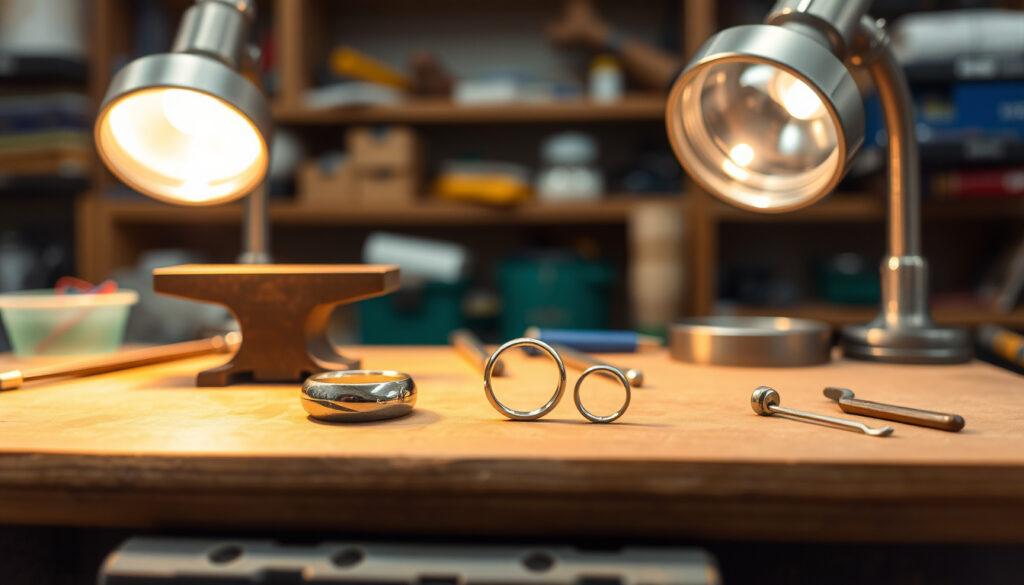
Ring Making Workshop Singapore: Prices, Tips and What to Expect
The idea of crafting your own wedding ring can feel intimidating — until you realize that in Singapore, you can walk into a studio with zero experience and leave three hours later with a polished band made from silver, gold, or platinum, and more couples and individuals are choosing hands-on workshops over retail counters, trading convenience for meaning. This guide breaks down the best ring making workshop options in Singapore, what they cost, and whether the experience is worth your time and money.
Average workshop duration: 3 hours ·
Popular materials: 18K gold, platinum, silver ·
Experience level required: None (beginner-friendly) ·
Customization option: Fully customizable designs
Quick snapshot
- Ring making workshops in Singapore exist and are popular among couples and individuals (FunEmpire)
- No experience needed for the majority of workshops (SingaReviews)
- Workshops last between 2 and 3 hours (KOBO Jewellery)
- Exact average price — not all studios list prices publicly
- Whether making your own ring is always cheaper than buying ready-made
- How many workshops are available beyond the top 5 studios
- Most studios offer consistent 2–3 hour sessions
- Booking in advance recommended — popular slots fill up
- Growing interest in custom experiences may lead to more studio openings
- Couples increasingly choose workshops over retail for personal significance
Five studios, one pattern: most Singapore ring making workshops cater to absolute beginners, but the materials and price points vary sharply. The table below lays out the key differences.
| Label | Value |
|---|---|
| Top studios in Singapore | KOBO, Fat Anvil, 28MM, Few Gram, Artisan8 |
| Typical workshop duration | 2–3 hours |
| Materials available | Silver, 18K gold, platinum, fused glass |
| Experience required | None for most workshops |
| Customization | Fully customizable designs |
The takeaway: whether you want a simple silver band or a diamond-set engagement ring, there’s likely a workshop that fits your skill level and budget.
Is ring making a good hobby?
What are the benefits of ring making?
- Creative satisfaction — you design and fabricate a tangible object in one session.
- No prior experience is required to join most workshops, according to SingaReviews.
- Workshops offer fully customizable designs, per FunEmpire.
Who can participate in a ring making workshop?
Most studios welcome anyone aged 12 and above — no artistic background needed. KOBO Jewellery states its workshops are suitable for “all skill levels”. Private and group sessions are available at studios like 28MM Studios, which has booked 50+ sessions on Klook (Klook).
What skills do you learn from ring making?
You’ll pick up basic silversmithing: sawing, filing, soldering, hammering textures, and polishing. FunEmpire notes that workshops teach “the basic foundations of silversmithing”. Over several sessions, you can progress to advanced techniques like stone setting.
For Singaporeans spending an average of S$4,600 on a wedding band (estimated), a S$120 workshop that lets you make it yourself redefines what that money buys: not just a ring, but the story of its creation.
Is Singapore known for jewelry?
How does Singapore’s jewelry scene compare regionally?
Singapore is not a traditional jewelry hub like Bangkok or Jaipur, but it has carved out a niche in modern, bespoke pieces. The rise of independent studios such as KOBO, Fat Anvil, and 28MM signals a shift from mass‑market retail to personalised craftsmanship.
What role do ring making workshops play in Singapore’s jewelry landscape?
Workshops act as a bridge between consumer and craftsperson. Rather than buying a finished ring, you learn the process and contribute to the design. The Culture Pass, a government‑subsidised programme, includes ring making workshops, indicating official support for craft experiences.
Are there local initiatives supporting jewelry craftsmanship?
- The National Arts Council’s Culture Pass offers discounted access to selected workshops.
- Studios like KOBO and Fat Anvil regularly run open‑house sessions during design weeks.
The implication: Singapore’s jewelry identity is increasingly defined by participation, not just purchase.
How much does a wedding ring cost in Singapore?
What factors influence wedding ring prices?
Material (silver vs 18K gold vs platinum), stone setting, complexity of design, and studio reputation. KOBO Jewellery lists a silver‑menu workshop starting at S$120 and an 18K gold/platinum menu starting at S$280. Engagement‑ring classes start at S$1,400 per ring, excluding gemstones.
How do bespoke workshop rings compare to retail prices?
A simple silver band in a retail store can cost S$80–S$150. Making it yourself at a workshop starting at S$115 (Few Gram, per SingaReviews) is comparable. But for gold or platinum, workshop prices often undercut boutique jewellers because you skip the retail markup. A Lemon8 review notes a two‑ring workshop at Few Gram for roughly S$208 — less than what many shops charge for a single branded band (Lemon8, user‑shared experience).
What is the price range for silver and gold wedding rings?
Silver: S$108–S$150 per pax (Few Gram, KOBO). Gold: starting around S$280 per pax (KOBO). Platinum: similar starting point. Some studios add surcharges — KOBO charges 10% extra for ring sizes over #21.
How much should I spend on an engagement ring if I make $100,000 a year?
What is the 3‑month salary rule and how does it apply?
The rule suggests spending three months’ gross salary — S$25,000 for a S$100,000 income. It originates from a 1940s De Beers marketing campaign, as noted by Brilliant Earth (jewellery educator). Financial advisers today widely argue it is outdated.
What do financial experts recommend for ring spending?
Alternatives like the 50‑30‑20 rule allocate 20% of income to savings and debt, leaving less for luxury purchases. For a S$100,000 earner, a reasonable ring budget might fall between S$2,000 and S$5,000 — far below the three‑month benchmark. A workshop‑made engagement ring from KOBO starts at S$1,400, which fits comfortably within that range.
How can making your own ring affect the budget?
By cutting out the retailer’s margin, you can often afford higher‑quality materials for the same price. KOBO offers a 10% discount when you craft both engagement and wedding bands in the same session (minimum spend S$4,600).
The workshop route requires a time commitment of several hours and advance booking. For a S$100,000 earner, the money saved may be less valuable than the time spent — but the emotional payoff is unique.
The pattern: For high earners, the workshop route trades time for money and emotional value, making it a viable alternative to the outdated three-month rule.
What is the 3 month ring rule?
Where did the 3‑month salary rule come from?
De Beers popularised the rule in the 1940s as part of a campaign to boost diamond sales. Brilliant Earth explains that it was never rooted in financial logic.
Is it still relevant for modern couples in Singapore?
Few Singaporeans adhere to it strictly. Local forums and reddit threads suggest most couples spend 1–2 months’ salary, or even less. The rule persists more as a cultural reference than a budgeting tool.
What do local jewellers think about this guideline?
Studios like KOBO don’t promote the rule; they emphasise customisation and value for the materials used. Fat Anvil’s focus is on the experience, not the spend.
What is the 2 1 1 rule for jewelry?
How does the 2:1:1 rule apply to accessorising?
The styling guideline suggests wearing two small accessories (e.g., stud earrings and a thin chain), one medium (a cocktail ring), and one statement piece (a bold necklace) for balance. It’s a general rule for visual harmony.
Can this rule be used for ring stacking?
Yes — you can stack two thin bands (small), one mid‑weight band (medium), and one signet or gemstone ring (statement). Many workshop participants use this principle when designing stacking sets.
What are exceptions to the rule?
Minimalists may ignore it entirely; maximalists can break it intentionally. The 2:1:1 ratio is a starting point, not a constraint. In the Singapore context, where understated elegance is common, many prefer a single statement ring.
The pattern: styling rules are descriptive, not prescriptive — workshops give you the freedom to follow or flout them.
Comparison: Ring making workshop in Singapore – top studios side by side
Six studios, one decision factor: how much do you want to spend, and how much guidance do you need? The table below shows the key differences.
| Studio | Starting price (silver) | Duration | Customization level | Location/notes |
|---|---|---|---|---|
| KOBO Jewellery | S$120 | 3 hours | High – 18K gold, platinum, 10% surcharge over size 21 | Central Singapore; also offers engagement ring classes from S$1,400 |
| Fat Anvil Studios | Contact studio | ~3 hours | High – fully customisable silversmithing | Central area; beginner foundations |
| 28MM Studios | Contact studio | ~2–3 hours | Silver and stainless steel | Spazio@Kovan, near Kovan MRT; listed on Klook |
| Few Gram Studio | S$115 | 1.5–2 hours | Silver only (999 silver) | Multiple locations possible; popular with couples |
| Artisan8 | Contact studio | Varies | Glass fusing & metal; unique material | Focus on fused glass, not solely ring making |
The trade‑off: KOBO offers the widest material range and longest session, but at a premium. Few Gram is cheaper and shorter, ideal for a quick intro. Fat Anvil and 28MM sit in the middle — good for those who want a balanced experience.
Pros and cons of ring making workshops vs buying ready‑made
Upsides
- 100% customisable – you control design, metal, finish
- No prior experience needed – guided step‑by‑step
- Potential cost savings on gold/platinum compared to retail
- Memorable shared activity – popular for couples, friends
- You walk away with a finished product you made yourself
Downsides
- Time commitment – you must block 2–3 hours (plus travel)
- Limited to studio’s material range – some don’t offer gold or platinum
- Not always cheaper for simple silver bands vs budget retail
- Advance booking required – last‑minute availability limited
- No resizing or returns – the ring is made to your finger at the session
The implication: The choice between workshop and retail depends on your priorities—meaning and customization vs. convenience and cost certainty.
What to expect: a step‑by‑step guide to a ring making workshop
Most beginner workshops follow a similar flow. FunEmpire’s guide outlines the typical process.
- Design consultation – choose ring profile, width, and texture. If you bring a sketch, the instructor will advise on feasibility.
- Metal selection – pick silver, gold, or platinum. The studio provides a pre‑cut piece based on your ring size.
- Sawing and shaping – cut the metal to shape, file edges, and form the ring around a mandrel.
- Soldering (for closed bands) – melt silver solder to join the ends. Instructor handles the torch if you’re nervous.
- Texture and finishing – hammer in patterns, stamp letters, or keep it smooth. Then sand and polish to a shine.
- Final check – fit the ring, adjust if needed, and engrave a message (if offered).
A first‑time maker will spend about two‑thirds of the session on hands‑on metalwork and one‑third on polishing and stamping. Expect to leave with a ring that shows small, charming imperfections — that’s the handmade appeal.
The pattern: The workshop experience is designed to be accessible, with instructors guiding every step, ensuring even first-timers leave with a wearable ring.
What we know, and what’s still unclear
Confirmed facts
- Ring making workshops in Singapore are popular and beginner‑friendly
- No experience required for most workshops
- Workshops last 2–3 hours
- KOBO offers silver from S$120, gold/platinum from S$280
What’s unclear
- Exact prices at Fat Anvil, 28MM, and Artisan8 – not publicly listed
- Whether a workshop ring is always cheaper than retail – depends on material and design complexity
- Total number of studios in Singapore – niche operators not well indexed
- Long‑term durability of homemade rings vs professional castings – limited data
- Few Gram’s starting price of S$115 is based on a third-party review and may not be current
The catch: While many facts are confirmed, the lack of public pricing for some studios means you should always confirm costs before booking.
What the studios say – in their own words
Craft your own 18K or Platinum wedding rings in a 3-hour workshop.
— KOBO Jewellery (Singapore jewellery studio)
Our workshops are fully customisable and range from learning the basic foundations of silversmithing.
— Fat Anvil Studios (silversmithing workshop)
No experience needed! Join our Silver Ring Making Workshop.
— Few Gram Studio (silver ring specialist)
The pattern: Each studio emphasizes customization and beginner-friendliness, reinforcing the accessibility of ring making in Singapore.
Summary: Is a ring making workshop right for you?
For Singapore couples weighing tradition against personalisation, the ring making workshop offers a middle ground that retail can’t replicate: you design, you build, and you wear your own work. The financial case is strongest for gold and platinum bands, where the markup on a ready‑made ring can be 50% or more. But even for silver, the experience adds a layer of sentimental value that no price tag can match. For the singles or hobbyists who simply want a creative afternoon, the cost is modest and the outcome tangible. For Singapore couples on a S$100,000 combined income, the choice is clear: skip the three‑month rule, book a S$120 workshop, and walk away with a ring that tells a story — or buy a mass‑produced band for the same price. Couples who choose the workshop route win on meaning every time.
singareviews.com, lemon8-app.com, lemon8-app.com, seeksophie.com
Frequently asked questions
What should I bring to a ring making workshop?
Comfortable clothes, closed‑toe shoes, and your ideas. Most studios provide all tools, metal, and safety equipment. KOBO recommends tying back long hair.
How long does a typical ring making workshop last?
Between 2 and 3 hours, depending on the studio and complexity. KOBO’s sessions are 3 hours; Few Gram’s are 1.5 to 2 hours.
Can I make a ring as a complete beginner?
Yes. All major Singapore studios explicitly welcome first‑timers with no prior experience.
How much does a silver ring making workshop cost in Singapore?
Starting prices range from S$115 (Few Gram) to S$120 (KOBO) for silver. Some studios offer discounts when booking for two.
Do I need to book a workshop in advance?
Yes – most studios require advance booking online. 28MM Studios on Klook shows 50+ bookings, suggesting it fills up regularly.
Can I make a ring with my partner as a couple?
Yes – couple workshops are very popular. Few Gram’s two‑ring booking was around S$208 according to a participant.
Is it cheaper to make a ring than to buy one?
For silver, prices are comparable to entry‑level retail. For gold and platinum, workshops can be cheaper because you skip the retail markup. KOBO’s engagement ring class at S$1,400 is a fraction of typical retail for a similar piece.
More related posts
 What Is Eric Cheng’s Net Worth? The Sevens Group Story
 Temporal Forces Card List: Top 10, Prices & Full Gallery
 OFX Login, Transfer, and Exchange: Guide vs Wise
 Royal Plaza Hotel Hong Kong: MTR Access, Reviews, Prices
 Mamma Mia Trattoria e Caffè (Suntec City): Menu, Reviews & Guide
 500 SGD to MYR: Current Exchange Rate and Best Ways to Convert
 Kurs Dollar Singapore Hari Ini: Live SGD to IDR Rates
 2026 Winter Olympics: Dates, Hosts, Bans, Weather, Next Games
