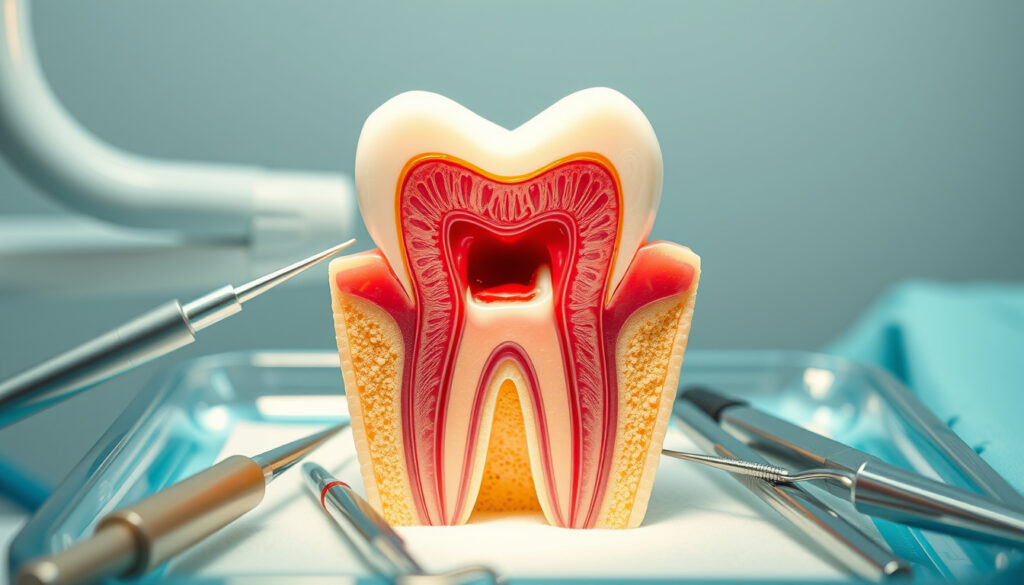
What Is a Root Canal? Procedure, Pain, Signs & Recovery
Root canals have a fearsome reputation — but most patients report that the pain they had before treatment was far worse than anything during or after. Understanding what’s actually involved can take a lot of the fear out of the chair.
Procedure removes infected pulp: Cleans and seals tooth canals · Typical duration: 30-90 minutes per top dental sources · Pain level: Minimal with anesthesia per AAE · Crown often needed: To protect treated tooth · Success preserves tooth: Prevents extraction
Quick snapshot
- Pulp removal is standard per AAE (American Association of Endodontists)
- Most recover in less than a week (Cleveland Clinic)
- Exact wait time before treatment becomes urgent varies by case
- Detailed step-by-step procedure descriptions vary between sources
- Day 0-1: Soreness begins as numbness wears off
- Days 1-3: Peak tenderness when chewing
- Weeks 1-2: Crown placement
- Follow-up visit confirms healing
- Permanent restoration protects the treated tooth long-term
| Fact | Details |
|---|---|
| What it treats | Infected tooth pulp |
| Goal | Save natural tooth |
| Common follow-up | Crown placement |
| Alternative if delayed | Tooth extraction |
| Typical procedure duration | 30-60 minutes (Q&A Dental Care) |
| Full recovery timeline | 1-2 weeks for tooth and tissues (OC Dental Specialists) |
| Apicoectomy bone healing | 3-6 months (Burien Endo) |
What is actually done in a root canal?
A root canal treats the inside of a tooth when the pulp — the soft tissue containing nerves and blood vessels — becomes infected or inflamed. The goal is to remove that damaged pulp, clean the canals, and seal the tooth so it can stay in your mouth rather than being extracted.
- Removing the pulp: The dentist or endodontist creates a small opening in the crown of the tooth to access the pulp chamber. Using specialized instruments, they carefully remove the infected or inflamed pulp tissue from inside the tooth’s root canals.
- Cleaning and disinfecting: After the pulp is removed, the empty canals are shaped and cleaned thoroughly to eliminate any bacteria or debris. Antiseptic solutions flush the canals, and the interior is disinfected to reduce the risk of future infection.
- Filling and sealing: The cleaned canals are filled with a rubber-like material called gutta-percha, which seals them permanently. A temporary filling closes the opening in the crown until a permanent restoration — typically a crown — can be placed (Burien Endo).
The implication: without this treatment, the infection would continue, almost certainly leading to extraction. Preserving the natural tooth avoids the cost and complexity of bridges or implants.
How do you tell if you need a root canal?
Not every toothache means you need a root canal, but certain symptoms warrant a dental visit to find out for sure.
Common signs and symptoms
- Severe, persistent toothache — especially throbbing pain that worsens when you lie down
- Prolonged sensitivity to hot or cold temperatures, even after the source is removed
- Pain when biting down or applying any pressure to the tooth
- Swelling in the gums near the affected tooth, sometimes with a small bump (abscess)
- Darkening or discoloration of the tooth, indicating internal damage
These signs often indicate that the pulp inside the tooth is infected or that the nerve is dying (Smith & Smith Endodontics).
When to see a dentist
If you experience any combination of these symptoms, schedule an appointment promptly. Dental infections don’t resolve on their own — delaying treatment can allow the infection to spread to surrounding bone or teeth.
The catch: some teeth with infected pulp show minimal symptoms initially. Regular dental checkups catch problems before they reach the emergency stage.
Catching an infected tooth early means simpler treatment, less discomfort, and a better long-term prognosis. Don’t wait for the pain to become unbearable.
How painful is having a root canal done?
This is where the myth-busting really matters. The fear of root canal pain is often worse than the reality.
During the procedure
Local anesthesia numbs the area completely, so you shouldn’t feel any pain while the dentist works. Some patients report feeling pressure or vibration, but sharp pain is not part of the procedure. The discomfort people associate with root canals actually comes from the infection before treatment, not the procedure itself (South Denver Endodontics).
Aftercare pain management
Once the anesthesia wears off — typically within a few hours — you’ll probably feel some soreness in the treated area. This discomfort comes from the tissues surrounding the tooth, not from the tooth itself, since the nerve has been removed. Over-the-counter ibuprofen or acetaminophen handles most cases, and ice packs applied for 15–20 minutes at a time can reduce swelling (South Denver Endodontics).
Most patients report that the post-procedure soreness is far less intense than the pain they experienced before treatment (StarWhite Dental).
What this means: modern anesthesia and techniques have transformed root canals from dreaded procedures into routine treatments that most patients describe as no more uncomfortable than a standard filling.
How long does a root canal take?
The time required depends on the complexity of your case and which tooth is being treated.
Single visit vs. multiple
A straightforward root canal on a front tooth with a single canal typically takes 30 to 60 minutes. Molars have multiple canals and more complex anatomy, which can push the procedure to 90 minutes or require a second appointment (Q&A Dental Care).
Factors affecting time
- Severity of infection — advanced cases may need additional cleaning or medication
- Number of root canals — front teeth typically have one; molars can have three or more
- Whether it’s a first-time procedure or a retreatment (removing old filling material adds time)
The pattern: the more canals and the more severe the infection, the longer the appointment. Your dentist will estimate the time after examining your X-rays.
What happens after a root canal?
Recovery from a root canal is generally quick, but following your dentist’s aftercare instructions matters for a smooth healing process.
Recovery time
Most patients feel back to normal within 3 to 7 days, with initial soreness peaking during the first 24 to 72 hours (Ashley Harrison DDS). By the second or third day, most soreness resolves, and daily activities can resume. Full tissue recovery takes 1 to 2 weeks (OC Dental Specialists).
Crown placement
A permanent crown or restoration is typically placed 1 to 2 weeks after the root canal to protect the treated tooth from fracture (Southern Oaks Family Dental). Without a crown, the tooth is vulnerable — a crack could undo the entire treatment.
Diet restrictions
- First 24 hours: stick to soft foods and avoid chewing on the treated side
- Days 1–7: continue soft foods, then gradually return to normal eating by the end of the week
- Avoid hard or sticky foods that could dislodge the temporary filling
Why this matters: the temporary filling protects the tooth until the permanent crown is placed. Chewing on hard foods too soon can crack the tooth before it’s protected.
How does a root canal compare to other options?
Understanding your alternatives helps put the root canal in context. Here’s how the main options stack up:
| Option | Procedure | Recovery | Long-term outcome |
|---|---|---|---|
| Root canal | Pulp removal, cleaning, filling, crown | 3–7 days to normal activities | Preserved natural tooth |
| Apicoectomy | Surgical removal of root tip | 2–3 days rest; bone healing 3–6 months | Saves tooth when standard RCT failed |
| Retreatment | Repeat root canal procedure | Similar to initial; slightly more discomfort if crown removal needed | Second chance to save tooth |
| Extraction | Tooth removal | Days to weeks | Requires implant or bridge to restore function |
The implication: extraction is sometimes necessary, but it creates a new problem — the gap left behind can cause neighboring teeth to shift, affecting bite and jaw alignment over time. The root canal preserves your natural tooth structure and avoids those complications.
Pros and cons of root canal treatment
Upsides
- Saves your natural tooth, avoiding extraction and replacement costs
- Eliminates the source of toothache caused by infected pulp
- Most patients recover in less than a week (Cleveland Clinic)
- High success rate with proper aftercare and crown placement
- Procedure is painless with modern anesthesia
Downsides
- Requires a crown afterward, adding cost and appointments
- Treated tooth may eventually need retreatment if seal fails
- Initial soreness lasts 24–72 hours
- Adjacent teeth may feel sensitive for 1–2 weeks
- Not suitable for teeth with severe structural damage
Signs of normal recovery vs. warning signs
Knowing what to expect helps you distinguish normal healing from complications.
| Sign | Normal recovery | Warning sign |
|---|---|---|
| Pain level | Mild tenderness, improving daily | Intense pain lasting more than 1 week |
| Swelling | Slight swelling that decreases each day | Persistent or increasing swelling |
| Sensitivity | Gradually diminishing sensitivity | Pain worsening instead of improving |
| Fever | None | Fever accompanying jaw swelling |
The pattern: recovery discomfort is dull and steadily improving. Pre-treatment infection pain is sharp, throbbing, and worsening. If your symptoms aren’t clearly improving day by day, call your dentist (OC Dental Specialists).
What to watch: intense pain that starts to feel better and then suddenly worsens can indicate a new infection or failed seal. Don’t assume it’s just healing — contact your dentist.
Root canal treatment is designed to stop pain at its source, and with today’s technology, it is a straightforward and reliable way to preserve your natural tooth.
— Ashley Harrison DDS (Ashley Harrison DDS)
Most people recover in less than a week. You might have some lingering sensitivity, but you shouldn’t have pain that lasts longer than that.
— Cleveland Clinic (Cleveland Clinic)
For most patients, root canal recovery is far less painful than the infection that made treatment necessary.
— StarWhite Dental (StarWhite Dental)
For anyone facing the decision between a root canal and extraction, the choice is clearer than the myths suggest. The procedure saves your natural tooth, eliminates the source of your pain, and gets most patients back to normal within a week. The alternative — extraction — doesn’t end the problem; it trades one tooth for a more complex and expensive restoration process down the road. If your dentist recommends a root canal, you’re looking at relief, not a punishment.
Related reading: root canal pain before during and after treatment · root canal
Dentists perform root canal therapy by removing infected pulp and sealing the tooth, following the root canal treatment process detailed in expert guides worldwide.
Frequently asked questions
Can you eat after a root canal?
Yes, but stick to soft foods for the first 24–48 hours and avoid chewing on the treated side until the permanent crown is placed. Avoid hard, sticky, or crunchy foods that could damage the temporary filling.
What causes a root canal?
Root canals are needed when the tooth pulp becomes infected or inflamed. Common causes include deep decay, repeated dental procedures on the same tooth, a cracked or chipped tooth, or trauma to the face that damages the pulp.
How to avoid a root canal?
Good oral hygiene prevents most root canal cases. Brush twice daily, floss daily, and see your dentist for regular checkups and cleanings. Addressing tooth decay early prevents it from reaching the pulp.
What is root canal recovery time?
Most patients feel back to normal in 3–7 days, with initial soreness peaking during the first 24–72 hours. Full tissue healing takes 1–2 weeks. Complete bone regeneration, in cases requiring surgical intervention, takes 3–6 months.
What are three signs you need a root canal?
Severe toothache that worsens when lying down, prolonged sensitivity to hot or cold, and swelling in the gums near the affected tooth are three common indicators. A dental examination and X-ray confirm the diagnosis.
What is the downside of a root canal?
The main downsides are the cost of the procedure plus a crown, the need for multiple appointments, and temporary soreness lasting a few days. In rare cases, the tooth may require retreatment if the seal fails.
How long does a root canal take?
A straightforward root canal typically takes 30 to 60 minutes. Molars with multiple canals can take 90 minutes or require a second appointment. Your dentist will estimate the time after examining your X-rays.
More related posts
 Singapore GDP Per Capita: Rankings, History & Why So High
 Estee Lauder Share Price: Live EL Stock Quote, Chart & Forecast
 Google Translate English to Burmese: Accuracy & How to Use
 Cast of Workin’ Moms: Full List of Actors and Characters
 How Old Is Singapore? 3 Correct Answers
 Digital Signage Player Singapore: Prices, Brands & Buying Guide
 Raffles Holland V Mall: Hours, Parking & Medical Guide
 Operator Jobs in Singapore: 1500+ Openings & Salaries 2026
